
Fractional ablative laser resurfacing in Birmingham
Consultant-led fractional ablative CO₂, Er:YAG and UltraClear laser resurfacing for acne scars, sun damage, texture, wrinkles and skin rejuvenation
Fractional ablative laser resurfacing is not a one-size-fits-all treatment. The depth, intensity and recovery time can be adjusted depending on your skin type, treatment goals and the amount of downtime you can manage. At Midland Skin, your consultant-led assessment is used to choose the safest and most appropriate approach for your skin.

Quick Facts about Fractional Laser

Best for
Scars, texture, rejuvenation, fine lines
Anaesthetic
Numbing cream +/- injections

Laser types
CO₂, Er:YAG & UltraClear
Treatment time
30-60 mins

Recovery
5-10 days

Price
See below
What is fractional ablative laser resurfacing?
Fractional ablative laser resurfacing is a controlled skin-renewal treatment. The laser creates thousands of microscopic treatment zones in the skin, removing tiny columns of damaged surface tissue while leaving surrounding skin intact. These untreated areas help the skin heal more quickly than fully ablative resurfacing.
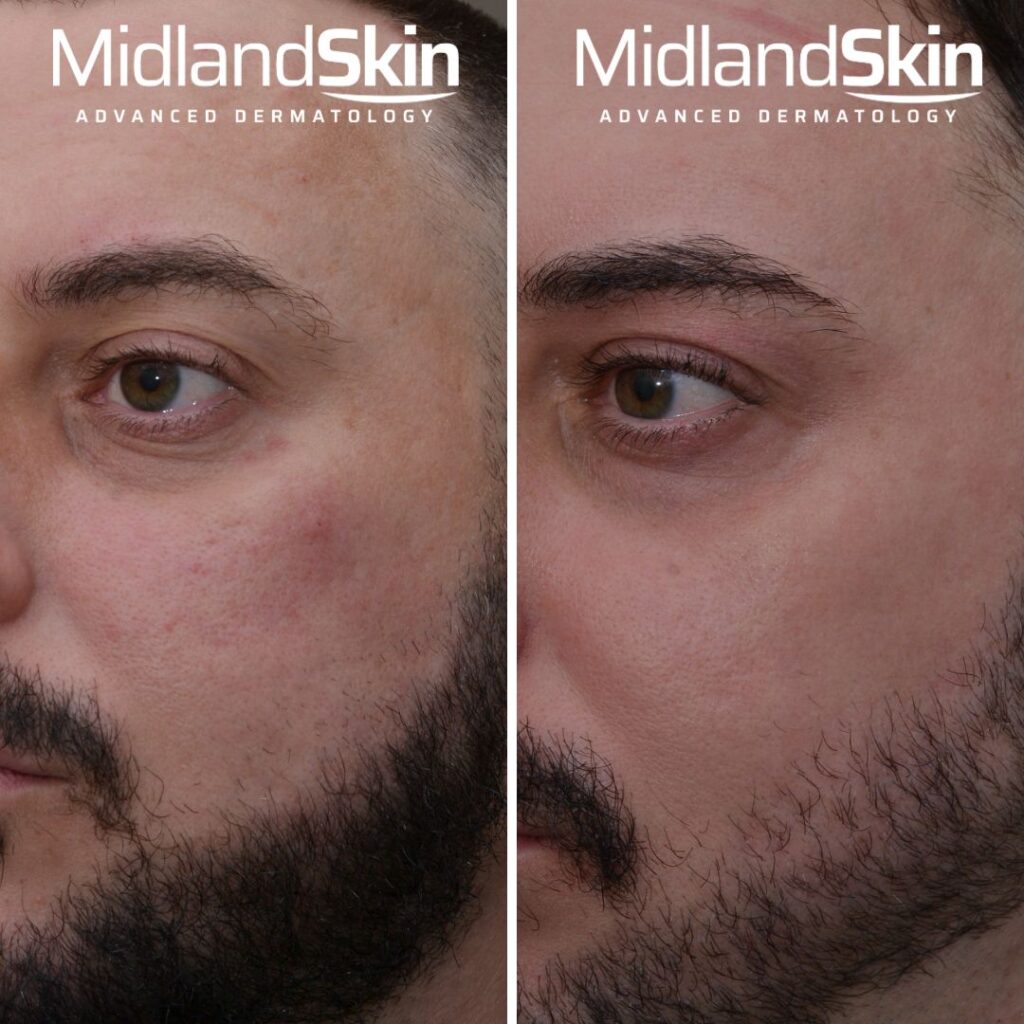
As the treated columns repair, the skin produces new collagen and replaces damaged surface cells with fresher, healthier skin. This can improve acne scars, surgical scars, sun damage, fine lines, enlarged pores, uneven texture and overall skin quality.
The treatment can be adjusted by changing the depth, density and intensity of the laser. This means fractional ablative resurfacing can be planned as a lighter treatment with shorter recovery, or as a deeper treatment for more significant scarring, wrinkles or sun damage, where recovery is usually closer to one week or longer.

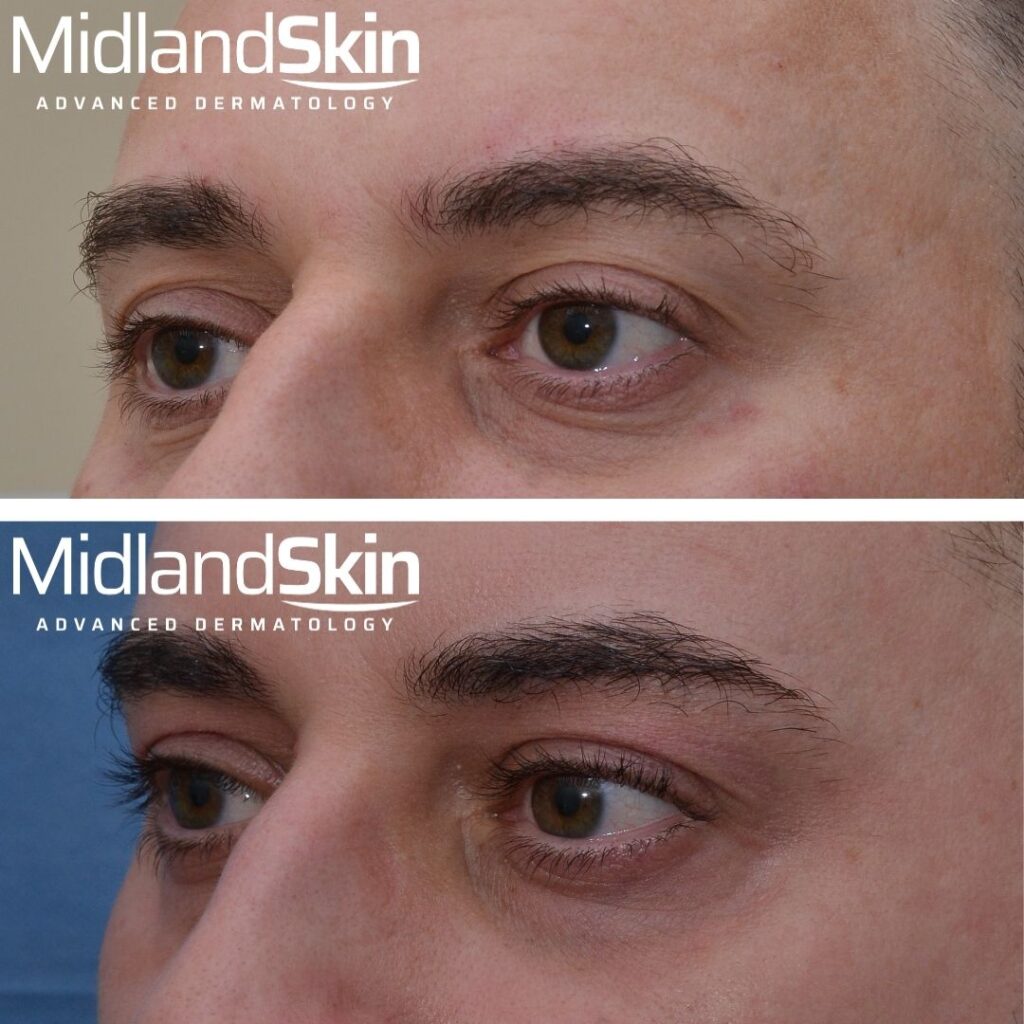
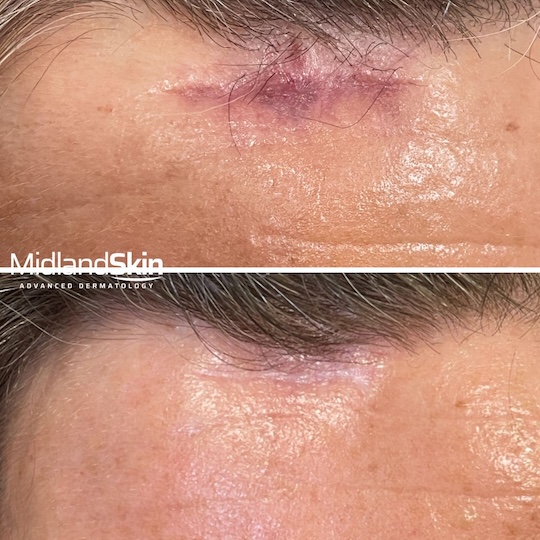
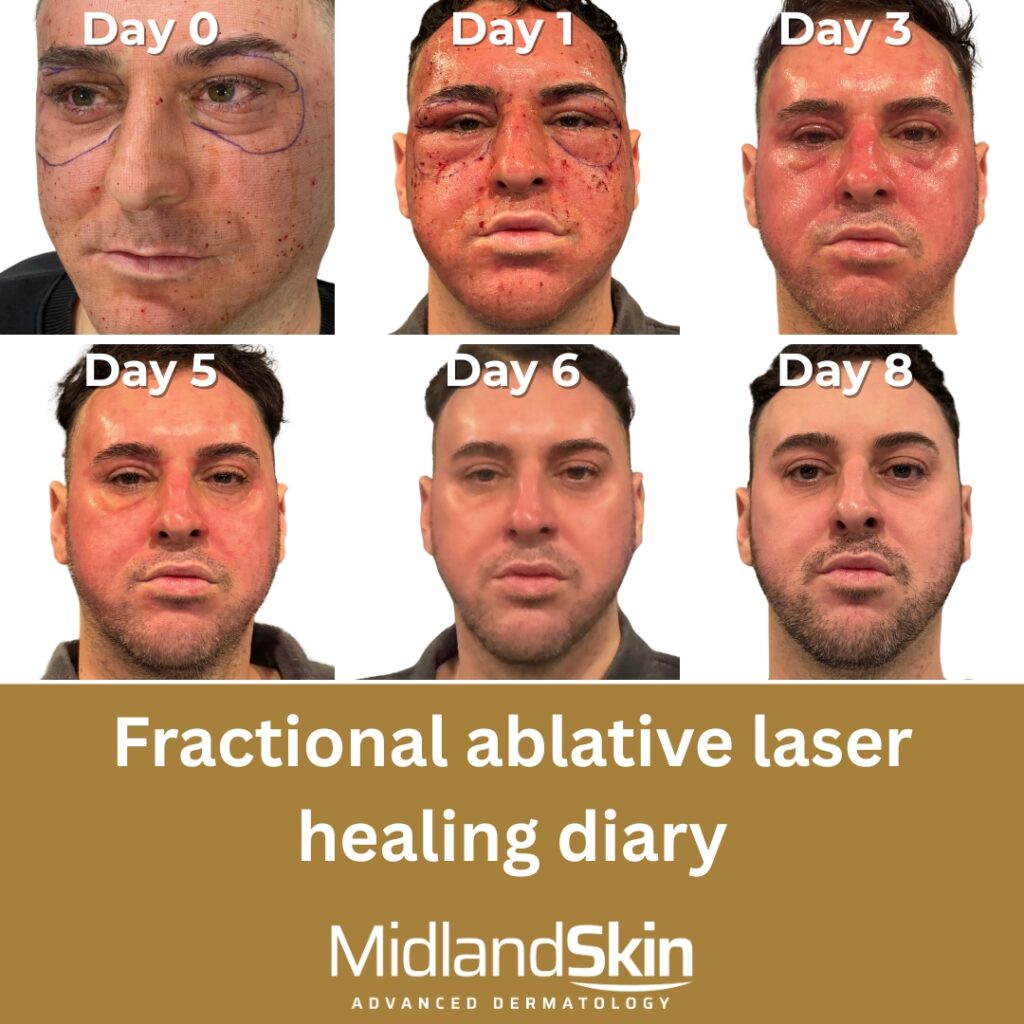
Before and after pictures of fractional laser resurfacing
Key advantages of fractional laser resurfacing
- Improves acne scars, surgical scars and uneven skin texture
- Softens fine lines, wrinkles and early skin ageing
- Improves sun damage, pigmentation irregularity and dullness
- Stimulates new collagen, so results continue to develop over several months
- Can be adjusted for different skin types, treatment areas and recovery times
- Can be repeated as part of a long-term skin maintenance plan
Who is fractional laser resurfacing suitable for?
Fractional laser resurfacing is suitable for adults who want to improve the quality, texture or tone of their skin and are willing to accept a short period of healing. It is most often recommended for:
- Acne scarring – particularly atrophic (depressed) scars, where ablative fractional laser remains one of the most effective non-surgical treatments
- Fine lines and wrinkles
- Sun damage and actinic change
- Skin tone, evenness and texture — improving overall skin quality, dullness and uneven pigmentation
- Reducing risk of skin cancer – as a dermatology clinic specialising in skin cancer, this is an increasingly common reason for treatment at Midland Skin.
- Surgical and traumatic scars — softening texture, reducing redness, and improving how the scar blends with surrounding skin
- Maintenance – Regular maintenance after fractional or fully ablative laser
Fractional laser resurfacing is not suitable for every patient. Treatment may need to be delayed if you have active infection, uncontrolled acne, recent tanning, certain pigment conditions, poor wound healing, or if you cannot follow the aftercare and sun protection advice. Your dermatologist will assess this during consultation.
Why choose Midland Skin in Birmingham for fractional laser
Fractional laser resurfacing is not a single treatment. Different lasers create different patterns of injury in the skin, with different depths, heat effects, recovery times and results. Having access to more than one laser system allows your dermatologist to choose the most appropriate treatment for your skin type, concern and available downtime.
At Midland Skin, laser resurfacing is performed or supervised by a consultant dermatologist with specialist expertise in laser medicine. We offer a broad range of fractional technologies, including ablative, hybrid and non-thermal systems. This means treatment can be tailored rather than using the same laser setting for every patient.
Ablative fractional systems used at Midland Skin
- UltraPulse CO₂ ablative laser – for deeper lines, scars and etched wrinkles
- Sciton ProFractional Er:YAG ablative laser – precise, low-thermal treatment for delicate areas
- UltraClear 2910nm Erbium ablative laser – next-generation erbium laser for rapid recovery
Related fractional technologies
- Halo hybrid fractional non-ablative & ablative combined laser – dual-wavelength system combining ablation and coagulation. read more on Halo laser
- MDF (Spectra Multi-Depth Fractional) – non-thermal acoustic fractional for pores and texture. Read more on MDF laser resurfacing
Although these technologies overlap, they are not identical. Your dermatologist will recommend the most suitable option based on your skin type, treatment area, scarring or ageing pattern, pigment risk and recovery preferences.
You can find out more about the different types of fractional lasers at Midland Skin here.
What is the difference between fractional and fully ablative laser resurfacing?
Fractional ablative laser resurfacing treats the skin in a pattern of tiny columns, leaving areas of untreated skin between them. These untreated areas help the skin repair more quickly, so recovery is usually shorter than with fully ablative resurfacing.
Fully ablative laser resurfacing treats the whole surface of the skin in the selected area. This can produce more dramatic improvement in suitable patients, particularly for deeper lines, more severe sun damage or advanced skin texture concerns, but it usually involves longer recovery and more intensive aftercare.
Your dermatologist will advise whether fractional or fully ablative resurfacing is more appropriate for your skin type, concern, risk profile and available downtime.
For more detailed information, see:

Scarlett Greenwood

Book in with us
Ready to get started? Book a consultation with our team at Midland Skin. Friendly, expert advice tailored to you.
Treatment journey: fractional laser resurfacing
Initial Consultation
You meet your consultant dermatologist, who assesses your skin, discusses your goals, confirms suitability and explains the most appropriate laser options.
Personalised Care Plan
You receive a written care plan including the recommended laser, likely number of sessions, preparation instructions, expected downtime, aftercare advice and costs. A two-week cooling-off period follows before treatment is booked.
Laser treatment
Laser treatment is carried out at a separate appointment. Most treatments take 30–60 minutes, depending on the area treated and the depth of resurfacing.
Follow-up and maintenance
You return for review to check healing, assess early results and decide whether further sessions or annual maintenance would be helpful.
Vicky
Ashley Cooper
Book in with us
Ready to get started? Book a consultation with our team at Midland Skin. Friendly, expert advice tailored to you.
Ashley Cooper
On the day: what to expect FAQs
Can laser resurfacing be done on the same day as the consultation?
No. Laser resurfacing is carried out after your consultation and written care plan. A two-week cooling-off period is allowed before treatment is booked, so you have time to consider the treatment, expected recovery, risks, aftercare and costs.
What should I do before I arrive?
You will be given preparation instructions in your care plan. In general, you should arrive with clean skin and no make-up on the treatment area unless advised otherwise.
You can read our detailed advice before and after fractional laser treatment here. You will usually need to purchase the following before your treatment:
- Skin barrier petroleum jelly-based ointment – either Vaseline or Aquaphor (make sure it’s a new product with each treatment cycle)
- A lightweight moisturiser to use as a regular moisturiser from day 5 onwards, such as Cerave Moisturising Lotion or Avene Hydrance
- Dermol 500 lotion for washing (you can also use your lightweight moisturiser to wash with if you wish)
- Ultra-absorbent kitchen towel
- Any prescribed medications such as antiviral medication.
What happens when I arrive?
Your treatment plan is checked, the treatment area is assessed and clinical photographs may be taken. The skin is then cleansed and numbing cream is usually applied before treatment. For deeper treatments or sensitive areas, local anaesthetic injections may also be used.
Please arrive with clean skin and no make up on.
What happens during fractional laser treatment?
You will wear protective eyewear throughout the procedure. The laser is then passed over the treatment area in a controlled pattern. The laser settings are chosen according to your skin type, treatment area, treatment goal and planned recovery time.
Will the treatment hurt?
Most patients describe heat, prickling or a sunburn-like sensation during treatment. Numbing cream, cooling and sometimes local anaesthetic injections are used to make the procedure more comfortable.
How long does treatment take?
Most treatments take around 30–60 minutes, depending on the area treated, the laser used and the depth of resurfacing planned. Your appointment may be longer because time is needed for numbing cream, preparation and aftercare instructions.
Will I need eye shields?
Yes, if treatment is being carried out close to the eyes or on the eyelids. Specialist eye shields are used to protect the eyes from laser light.
Can I drive home afterwards?
This depends on the treatment area and intensity. If you are having deeper resurfacing, eyelid treatment, treatment close to the eyes, sedation, or if your vision may be affected by swelling or ointment, you should arrange for someone to collect you.
After laser: repair and recovery FAQs
What will my skin look and feel like immediately afterwards?
Redness, swelling, heat, tightness, pinpoint crusting and sometimes light oozing are expected after fractional ablative laser resurfacing. The skin often feels sunburnt for the first 24–48 hours.
How should I care for my skin while recovering?
You will receive personalised aftercare instructions after your treatment. In most cases, recovery involves gentle cleansing, regular moisturising, sun avoidance and temporary changes to your normal skincare routine.
We usually advise gentle cleansing twice daily with a soap-free cleanser such as Dermol 500. A barrier ointment, such as Aquaphor or plain Vaseline, is often used for the first few days to keep the skin surface moist while it heals. After this, many patients move to a lighter, non-fragranced moisturiser such as CeraVe or Cetaphil.
You should avoid sun exposure until the skin has fully healed, then use a high-factor sunscreen daily. If you are prone to cold sores, antiviral tablets are usually prescribed. A short course of oral steroids may also be advised after deeper procedures to reduce swelling.
For detailed preparation and recovery instructions, read our advice before and after fractional laser treatment.
How long does recovery take?
Recovery depends on the laser used, the depth of treatment, the treatment density and the area treated. Lighter treatments may settle within a few days. Deeper fractional CO₂ or erbium treatments commonly need 5–10 days before the skin surface has recovered.
What is the usual recovery timeline after fractional ablative laser?
Recovery depends on the laser used, the treatment depth, treatment density and the area treated. As a general guide:
First 24–48 hours
Heat, redness, swelling and tenderness are common. The skin may feel like sunburn.Days 3–6
Redness and swelling usually begin to improve. Tiny crusts or dots may become more visible. These should be allowed to lift naturally and must not be picked.Days 7–10
Many patients can return to mineral make-up, depending on the depth of treatment and how quickly the skin surface has healed.Following weeks
Mild redness can persist, especially after deeper CO₂ or erbium laser treatment. Collagen remodelling continues for several months, so results develop gradually.When can I wear make-up again?
Most patients can restart mineral make-up once the skin surface has healed, usually after around 7–10 days. Deeper treatments, eyelid treatment or treatment around the mouth may take longer.
When can I exercise?
You should avoid strenuous exercise, swimming, saunas, steam rooms and heavy sweating while the skin is healing. Your dermatologist will advise when it is safe to restart these, depending on the depth of treatment.
Is oozing normal?
Light clear or slightly yellow fluid can occur in the first few days. Pinpoint bleeding can also occur, particularly after erbium laser treatment. You should contact the clinic if you develop increasing pain, spreading redness, pus, fever or worsening swelling.
Will I need medication afterwards?
Some patients are prescribed antiviral tablets to reduce the risk of cold-sore reactivation. Antibiotics, anti-inflammatory medication or a short course of oral steroids may be recommended for selected higher-intensity treatments.
How long will redness last?
Redness usually improves over days to weeks. Deeper CO₂ or erbium treatments can leave mild redness for several weeks and occasionally longer. This will be discussed during your consultation.
When will I see results?
Some improvement is visible once the skin has healed, but collagen remodelling continues for several months. Scars, wrinkles and skin texture usually improve gradually rather than immediately.
Risks and possible side-effects from fractional ablative laser
Fractional laser resurfacing is generally low risk when performed by an experienced clinician, but all procedures carry potential risks. These include:
- Infection: Rare, but antibiotics may be given for higher-intensity treatments or if signs of infection develop.
- Cold-sore reactivation: Prophylactic antivirals are recommended for patients with a history of herpes simplex.
- Acne flares: The procedure can temporarily worsen acne if not well controlled beforehand; we may prescribe topical or oral medication to prevent this.
- Persistent redness: Usually fades within weeks, but can occasionally last several months after deeper CO₂ resurfacing.
- Post-inflammatory hyperpigmentation: Temporary darkening may occur, especially in darker skin types. This often improves gradually, but may need prescription pigment-suppressing treatment and careful sun protection.
- Melasma flare: Melasma can worsen temporarily and may require maintenance therapy.
- Scarring: uncommon with fractional techniques, but possible, particularly if infection, picking, trauma or delayed healing occurs.
- Unsatisfactory or limited response: Results vary between individuals. Some patients may require multiple sessions or combination treatments for optimal improvement. Some individuals may not get any improvement from treatment, and therefore a guarantee is not provided for any particular outcome.
Fees for fractional ablative laser resurfacing Show pricing
Book ConsultationInitial dermatology assessment
Fractional laser resurfacing – face excluding eyelids
Fractional laser resurfacing – face including eyelids
Fractional laser resurfacing – periorbital (eyelids)
Your exact treatment cost is confirmed in your personalised care plan after consultation, because the recommended laser, depth, treatment area and number of sessions vary.
Book in with us
Ready to get started? Book a consultation with our team at Midland Skin. Friendly, expert advice tailored to you.
References used for this article
Manstein D, Herron G S, Sink R K, Tanner H, Anderson R R. Fractional photothermolysis. Lasers Surg Med. 2004;34(5):426–438.
Robati R M, Asadi E. Fractional CO₂ vs Er:YAG in wrinkles. Lasers Med Sci. 2017;32(2):283–289.
Selim M M et al. Clinical evaluation of a new 2910 nm erbium laser. Lasers Surg Med. 2023.
Tanghetti E A. Histology of skin treated with picosecond fractional lens array. Lasers Surg Med. 2016;48(7):646–652.
About the Author
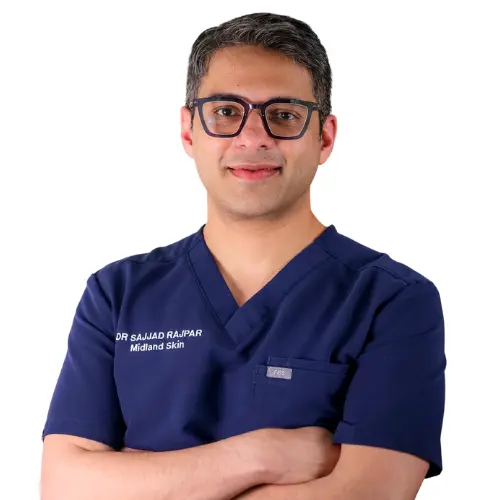
This page has been written and/or medically reviewed by Dr Sajjad Rajpar, Consultant Dermatologist and Medical Director of Midland Skin, Birmingham.
Dr Rajpar is on the GMC Specialist Register in Dermatology and has over 20 years’ experience in clinical dermatology. He provides clinical oversight to ensure the information on this page is accurate, balanced and consistent with current dermatology practice.
Dr Sajjad Rajpar
Date last updated: 10th May 2026
Book in with us
Expert, consultant led care in dermatology, skin surgery, eyelid surgery, lasers and aesthetics.
Disclaimer
The content on this website is provided for general information only. It is not, and must not be treated as, medical advice, a diagnosis, or a recommendation for any particular treatment. We make reasonable efforts to keep information accurate and up to date, but medicine and technology change, and content may not reflect the most current evidence, guidance, product information, or individual practice. You should not rely on this website to make decisions about your health or treatment. Always seek personalised advice from an appropriately qualified healthcare professional. Any examples, images, testimonials, and outcome descriptions are illustrative only. Results vary between individuals and no outcome can be guaranteed.


