
3DMIRACL treatment in Birmingham
Low-downtime UltraClear laser resurfacing for brighter, smoother and more even-looking skin

Quick Facts about 3DMIRACL

Best for
Dullness & early skin ageing
Anaesthetic
Usually not needed

Duration
Around 15 minutes

Recovery
Pinkness & light peeling
Sessions
3-treatment initial course

Price
See below
What is 3DMIRACL?
3DMIRACL is a superficial fractional laser resurfacing treatment performed using the UltraClear 2910 nm laser.
Midland Skin was the first clinic in the Midlands and one of the first clinics in the UK to offer UltraClear laser.
3DMiracl is one of our favourite treatments as it treats a precise fraction of the skin surface, encouraging renewal while allowing the surrounding skin to recover quickly. The result is a treatment that can improve skin quality with considerably less downtime than deeper forms of laser resurfacing.
It is particularly useful when the aim is to make the skin look brighter, smoother and fresher, rather than undertake a more intensive resurfacing procedure.
Who is 3DMIRACL suitable for?
3DMIRACL may be a good option if you are noticing:
- dull or tired-looking skin
- uneven skin tone
- superficial sun damage or pigmentation
- early fine lines
- mild textural change
- a general loss of freshness or luminosity
It can also be particularly useful for people with sensitive or reactive skin, where a gentler resurfacing approach with relatively little downtime may be preferable.
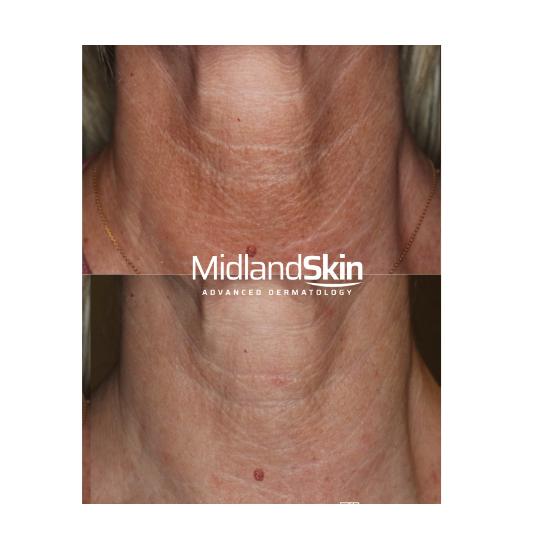
The treatment is suitable for the face, neck, back of hands as well as almost anywhere on the body.
Because treatment is quick and recovery is usually limited, 3DMIRACL can also be incorporated into a pre-event skin programme. For example, it can be used as a gentle resurfacing treatment in the weeks leading up to a wedding, including as a final skin-refresh treatment around six weeks before the event.
It can also suit people who want the benefits of laser resurfacing but cannot accommodate the recovery associated with deeper treatments.
Combining 3DMIRACL with other treatments
3DMIRACL can be used as a standalone treatment, but it is also useful as part of a wider skin rejuvenation programme. Depending on your skin and what you would like to improve, we may combine or sequence it with treatments such as BBL, laser toning or Sofwave.
These treatments target different aspects of skin ageing and skin quality, so the most appropriate combination and timing are planned during your initial assessment.
The treatment is intentionally gentle, so more significant wrinkles, acne scarring, deeper pigmentation or advanced sun damage may require a different treatment approach. Your initial aesthetic assessment allows us to decide whether 3DMIRACL is likely to give you enough improvement or whether another treatment would be more worthwhile.


Scarlett Greenwood

What results can I expect?
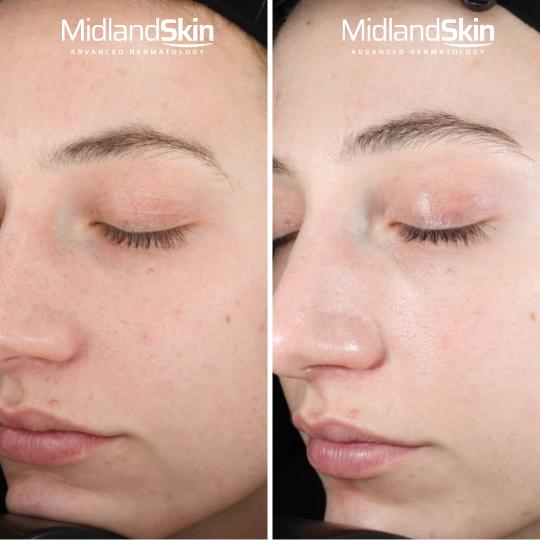
3DMIRACL is designed to produce a natural improvement in overall skin quality. After treatment, the skin may gradually look brighter, smoother and more even.
Published research on superficial 2910 nm fractional laser treatment has shown improvement in mild facial photodamage, although studies are relatively small and individual results vary.
For most patients looking for a cumulative improvement, we recommend an initial course of three treatments approximately four weeks apart.
Once the initial course has been completed, 3DMIRACL can be repeated as a maintenance treatment. Depending on your skin, response and goals, this may be approximately every three months or every six months.
A single treatment can also be considered when the aim is simply to give the skin a periodic refresh.
What should I expect after 3DMIRACL?
Immediately after treatment, the skin is usually mildly pink and may feel warm, and lightly stingy, similar to light sun exposure.
Some mild swelling can occur during the first day or two. Light dryness or peeling may then develop over the following few days as the skin renews. Peeling can take a full week to fully settle.
Most people can continue with their usual day-to-day activities, although some visible pinkness or peeling may be noticeable for several days.
As with laser resurfacing generally, possible complications include more prolonged redness, irritation, pigment change, infection or scarring. These are uncommon with superficial treatment, but no laser procedure is completely risk-free and the response of your skin cannot be guaranteed.
Book in with us
Ready to get started? Book a consultation with our team at Midland Skin. Friendly, expert advice tailored to you.
3DMIRACL treatment pathway
Initial aesthetic assessment
We assess your skin, discuss the concerns you would like to improve and understand the type of result you are hoping to achieve. We will advise whether 3DMIRACL is likely to give you enough improvement or whether another treatment would be more appropriate.
Care plan
If 3DMIRACL is appropriate, we discuss the proposed treatment, expected improvement, recovery and relevant risks. We will also advise whether you would benefit most from a single treatment, an initial three-treatment course or an ongoing maintenance programme. Treatment is arranged once the plan has been agreed and any applicable cooling-off requirements have been completed.
3DMIRACL treatment
Your skin is cleansed and protective eyewear is applied. Anaesthetic is not normally required. The UltraClear laser is then passed systematically across the treatment area in a fractional pattern. A typical treatment appointment takes around 15 minutes.
Further treatment and maintenance
For patients completing an initial course, treatments are normally spaced approximately four weeks apart. Once the initial course is complete, treatment can be repeated approximately every three to six months where ongoing maintenance is desired.
Practical FAQs about having 3DMIRACL at Midland Skin
What should I do before treatment?
Please follow the preparation advice given at your initial aesthetic assessment. On the day of treatment, arrive with clean skin and without make-up on the area being treated. Please alert your practitioner if you have a history of cold sores.
Does 3DMIRACL hurt?
Anaesthetic is not normally required. You may notice warmth, prickling or a brief sunburn-like sensation while the laser is being used.
What aftercare will I need?
You will be given specific skincare instructions following treatment. Use gentle skincare while the skin is recovering and avoid irritating or active products until advised that they can be restarted. A non foaming cleanser can be used once a day and an unscented moisturiser every 3 to 4 hours for the first few days.
Use a broad-spectrum SPF 50+ and take sensible measures to limit direct sun exposure while the skin is recovering. Good ongoing sun protection also helps protect the improvements achieved with treatment.
How long does treatment take?
The laser treatment itself is quick. A typical treatment appointment takes around 15 minutes, although this varies with the area being treated.
What will my skin look like afterwards?
The skin will usually look mildly pink and may feel warm. Mild swelling can occur and some light peeling or dryness may become visible over the following few days.
Can I wear make-up afterwards?
Make-up can usually be restarted from the following day provided the skin is comfortable and you follow the aftercare advice given to you.
Can I go back to work?
Most people can continue working and normal everyday activities. However, some visible pinkness or peeling may be noticeable for several days.
Can I have 3DMIRACL before a wedding or important event?
Yes. Its relatively short recovery makes 3DMIRACL useful as part of a pre-event skin programme.
For a wedding or similarly important event, we prefer to plan treatment well in advance rather than treating immediately beforehand. A 3DMIRACL treatment around six to eight weeks before the event can provide a useful final skin refresh while leaving plenty of time for the skin to settle.
If you are considering a course of treatments before a wedding, your initial aesthetic assessment can be used to plan the timing of the course around the event.
Ashley Cooper
Fees for 3DMiracl
3DMiracl Show pricing
Book ConsultationLaser assessment with aesthetic practitioner
Initial aesthetic assessment with a Consultant
3D Miracl
References used for this article
- Bernstein EF, Sanzo JF, Wang JY, Cotsarelis SM, DiLeonardo M. Low-fluence treatment with a novel fractionated 2,910-nm fiber laser improves photodamage. Lasers Surg Med. 2023;55(1):35–45. doi:10.1002/lsm.23624.
- Selim MM, Lowery JA, Maredia HS, Zelickson BD. Clinical evaluation of a new fractional ablative 2910 nm erbium laser on photodamaged skin: A pilot study. Lasers Surg Med. 2023;55(8):715–723. doi:10.1002/lsm.23714.
About the Author
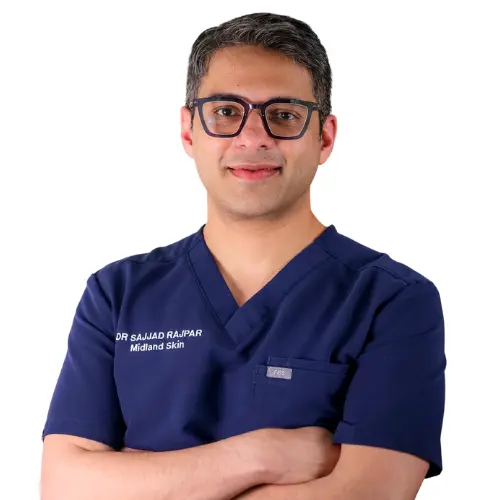
This page has been written and/or medically reviewed by Dr Sajjad Rajpar, Consultant Dermatologist and Medical Director of Midland Skin, Birmingham.
Dr Rajpar is on the GMC Specialist Register in Dermatology and has over 20 years’ experience in clinical dermatology. He provides clinical oversight to ensure the information on this page is accurate, balanced and consistent with current dermatology practice.
Dr Sajjad Rajpar
Date last updated: 25th Aug 2026
Book in with us
Expert, consultant led care in dermatology, skin surgery, eyelid surgery, lasers and aesthetics.
Disclaimer
The content on this website is provided for general information only. It is not, and must not be treated as, medical advice, a diagnosis, or a recommendation for any particular treatment. We make reasonable efforts to keep information accurate and up to date, but medicine and technology change, and content may not reflect the most current evidence, guidance, product information, or individual practice. You should not rely on this website to make decisions about your health or treatment. Always seek personalised advice from an appropriately qualified healthcare professional. Any examples, images, testimonials, and outcome descriptions are illustrative only. Results vary between individuals and no outcome can be guaranteed.


