
Rosacea, redness and facial flushing treatment in Birmingham
Consultant dermatologist-led diagnosis and treatment for facial redness, flushing, thread veins, inflammatory rosacea, sensitive skin and rhinophyma.
At Midland Skin we offer Rosacea, Redness and Flushing consultations with a Dermatologist for patients in Birmingham, Solihull, Coventry, Wolverhampton, Worcester and the Midlands.


Quick Facts about Rosacea and Redness

Best for
Redness, flushing, spots
Treatment
Prescription, skin care, laser
Consultant
Dermatologist

Laser course
5-7 sessions, if needed

Price
See below
What is rosacea?
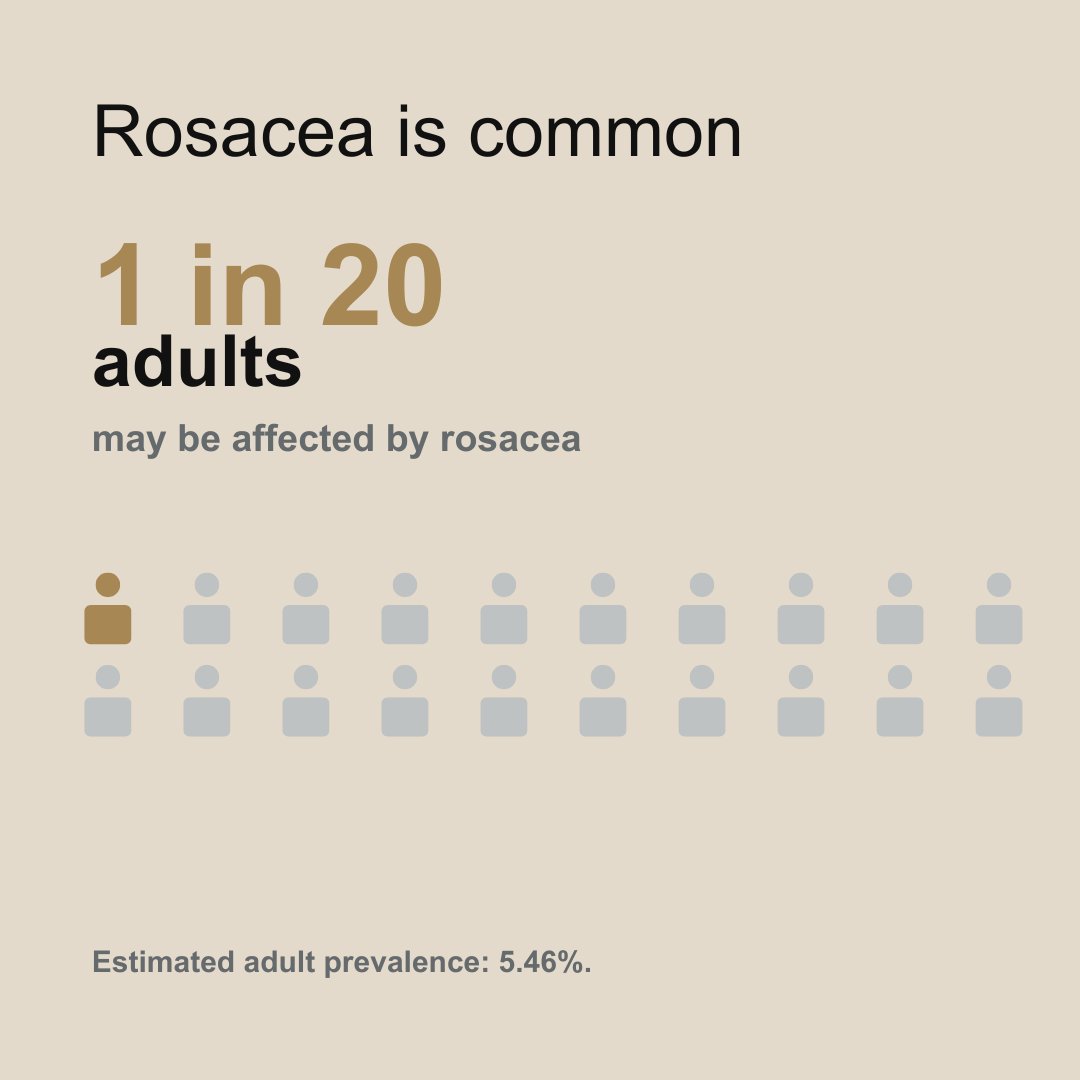
Rosacea is a long-term inflammatory skin condition that mainly affects the central face, including the cheeks, nose, chin and forehead. Rosacea is common and affects 1 in 20 people.
It can cause redness, flushing, visible thread veins, spots, skin sensitivity, burning or stinging, and in some people eye symptoms or thickening of the skin around the nose.
Rosacea cannot usually be cured permanently, but it can often be controlled with the right combination of skincare, trigger management, prescription treatment and, where appropriate, laser or light-based treatment.
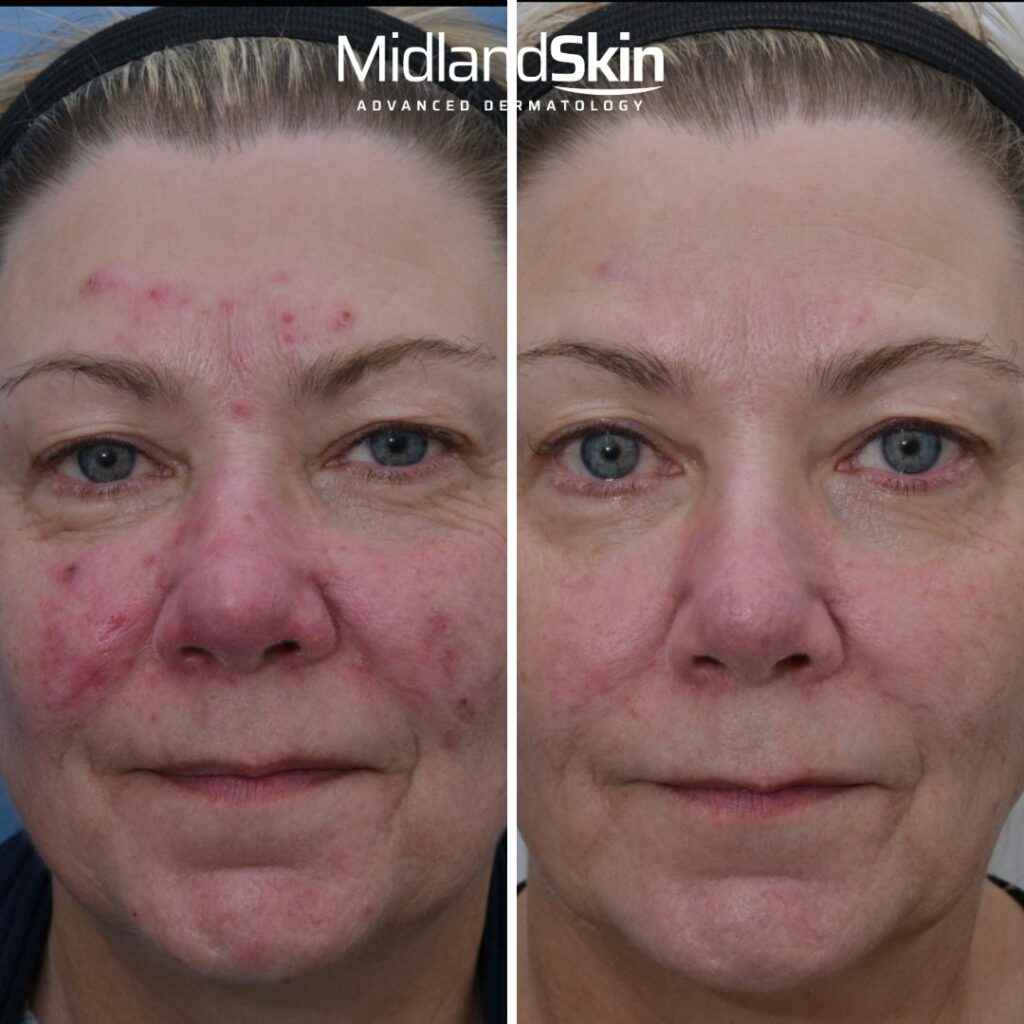
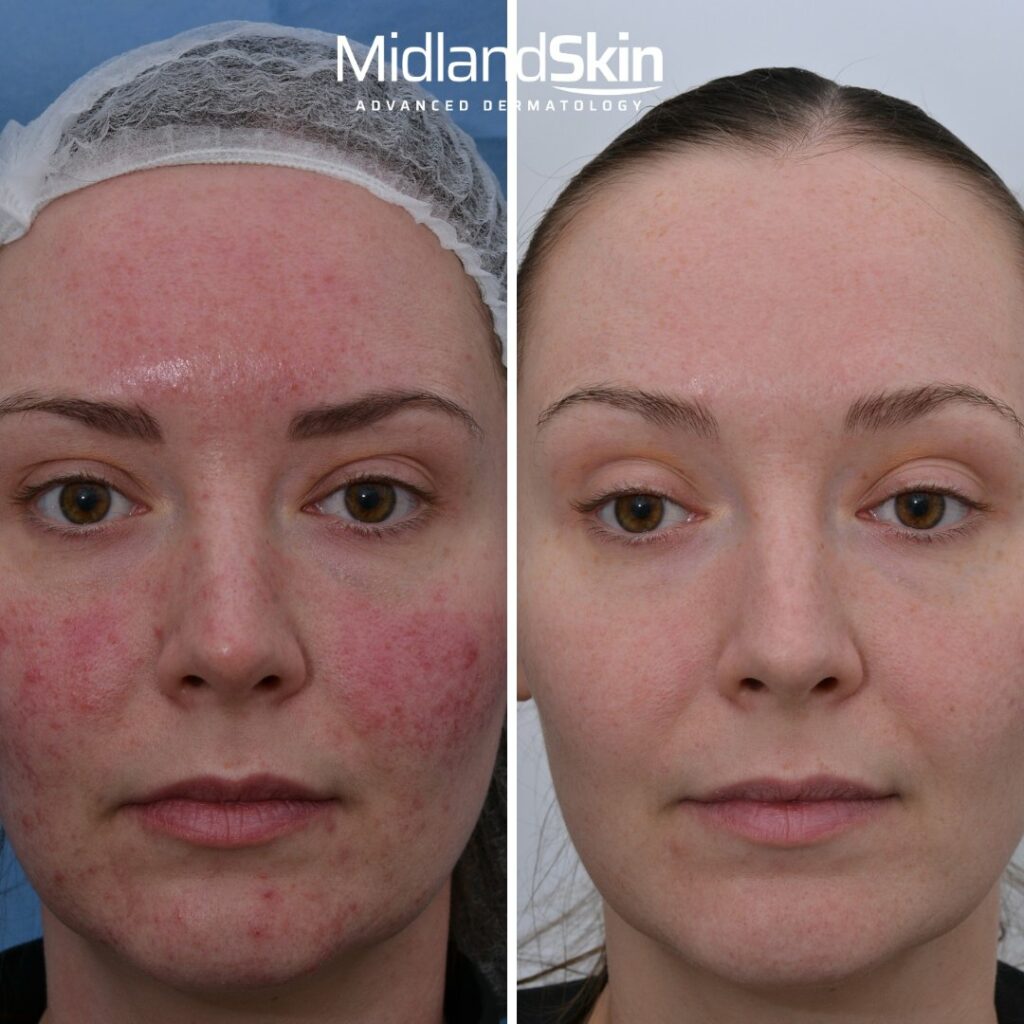
Before and after pictures of rosacea and redness treatment
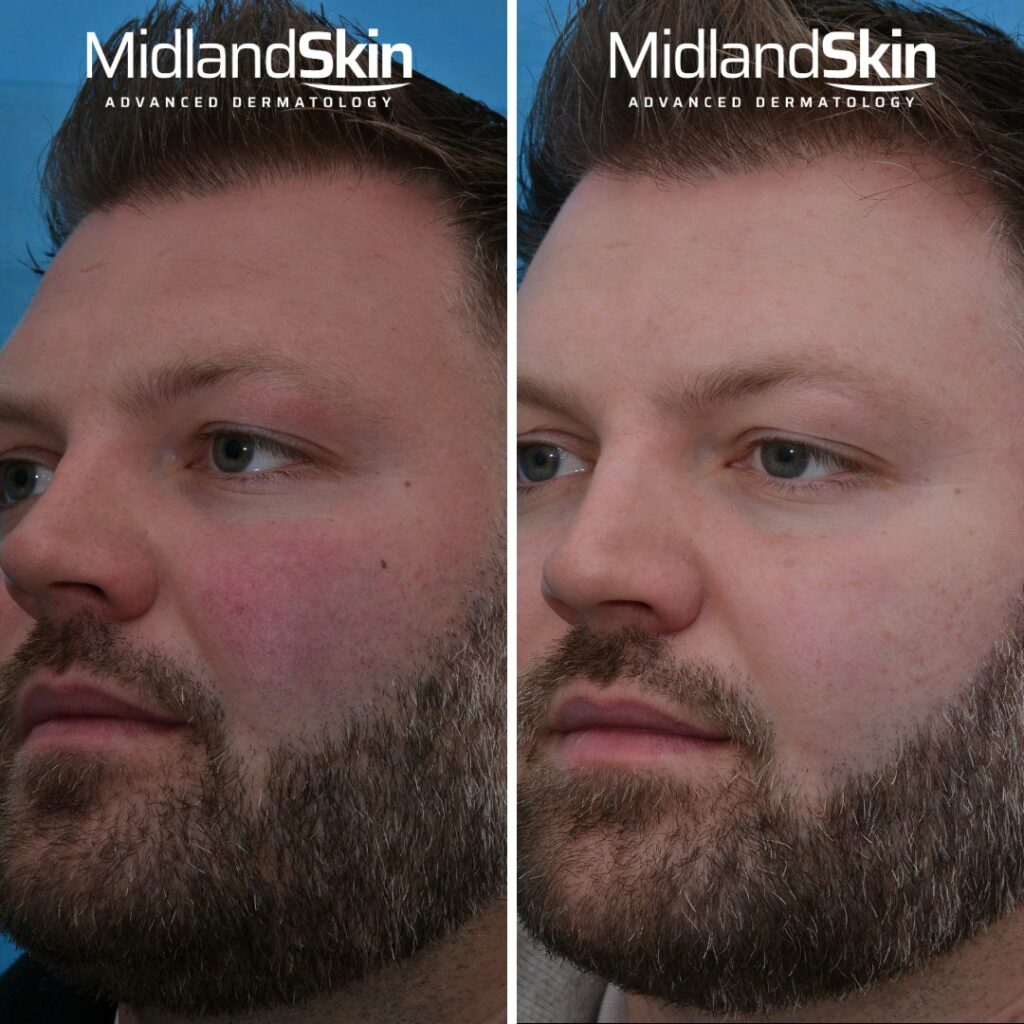
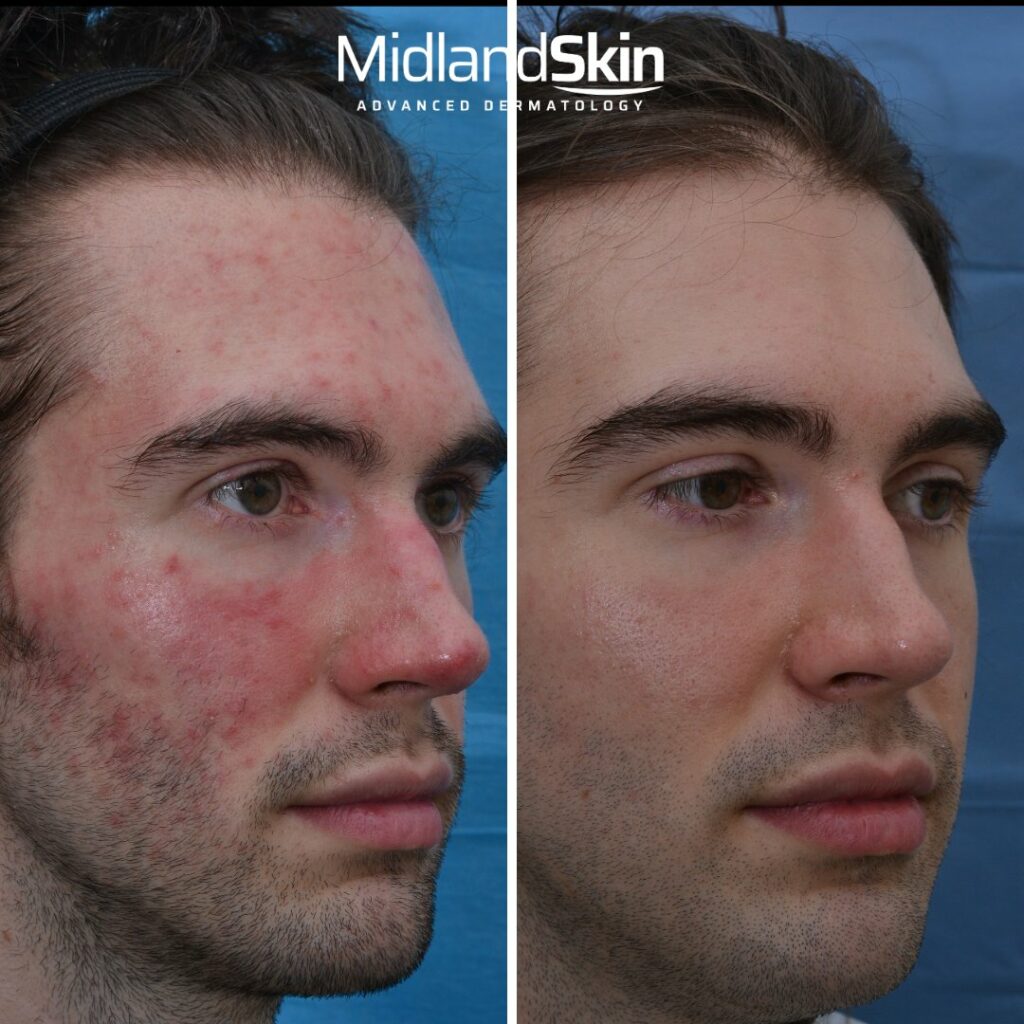
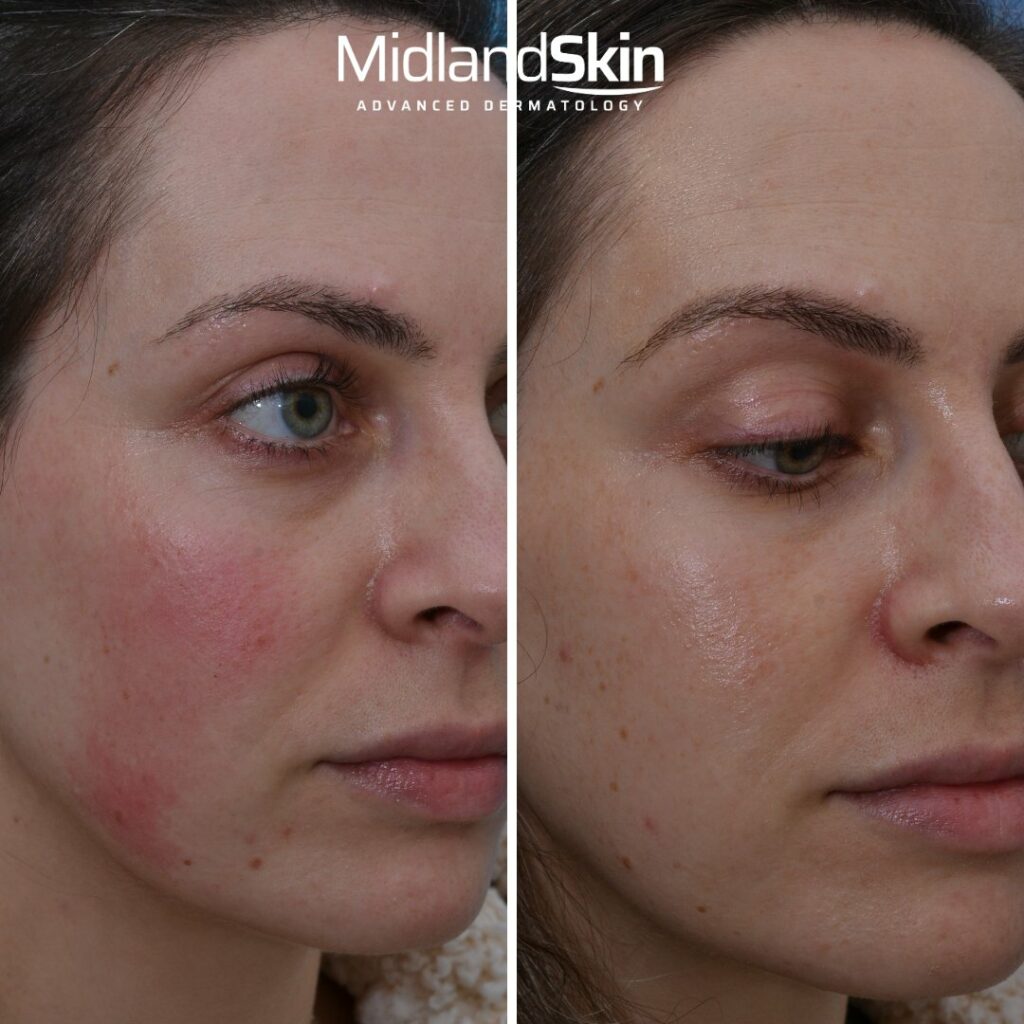
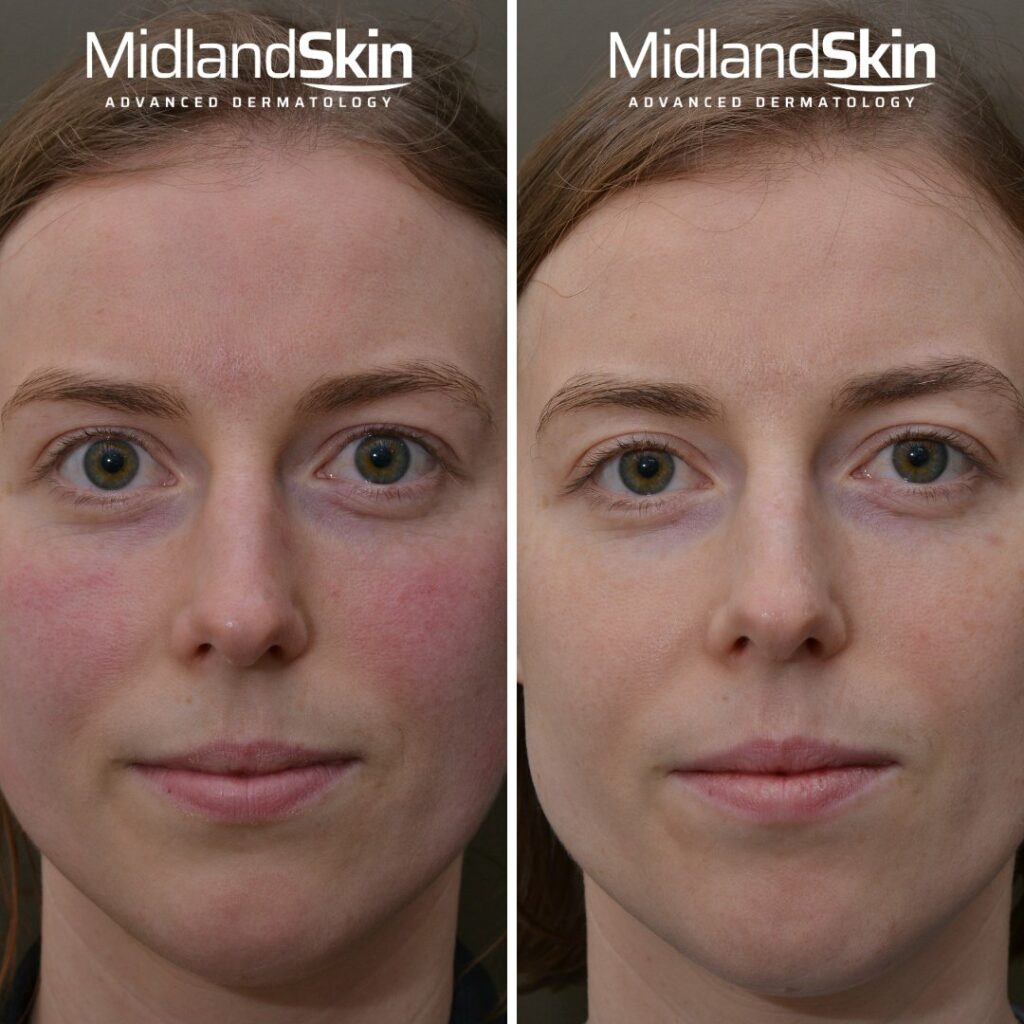
Rosacea videos
Rosacea, Redness & Flushing: Under The Microscope
Facial Redness – Emotional Impact on Sufferers & Treatment Option
Rosacea & Redness… The Importance of a Diagnosis
Can You Have Acne & Rosacea At The Same Time?
3 Things You Might Not Know About: Thread Veins
Thread Veins Laser Transformation
Key points about rosacea treatment
- Rosacea treatment depends on the pattern of symptoms, not a one-size-fits-all approach
- Prescription treatment may be used for inflammatory spots and pustules, such as oral medication, prescription creams and bespoke pharmacological creams
- Laser and BBL are often better for persistent redness and visible thread veins
- Flushing can also respond to Laser and BBL but may need additional treatments such as oral medications or botulinum toxin injection.

Scarlett Greenwood

What symptoms can rosacea cause?
Rosacea symptoms vary from person to person. Some people mainly flush, others have persistent redness or thread veins, and some develop inflammatory spots, sensitive skin or eye symptoms.
Common symptoms include:
- Spots and pustules. Red bumps and pustules that look like acne, typically on the forehead, cheeks, nose and chin.
- Nodules. Deeper, larger areas of inflammation that can look similar to cystic acne.
- Persistent redness. Background redness across the central face, ranging from a light pink to a deeper, more uniform redness.
- Flushing. Sudden episodes of heat, sensitivity and bright redness across the face. This can be one of the most difficult symptoms to live with.
- Thread veins. Visible small blood vessels, often around the nose, cheeks and chin.
- Burning and stinging. Many people experience uncomfortable sensations in the affected skin, even without visible inflammation.
- Sensitive skin. Skin that feels sore or reactive, and may struggle to tolerate everyday skincare products. It can also feel dry, rough or dehydrated despite regular moisturising.
- Swelling. Recurrent swelling on the nose, cheeks or chin, usually linked to inflammatory flares.
- Eye irritation. Dry, itchy, gritty or watery eyes, sometimes with eyelid inflammation.
- Rhinophyma. Gradual thickening of the skin of the nose, with prominent pores.
If you recognise any of these symptoms, a dermatology consultation can confirm whether they are caused by rosacea, identify the main pattern, and recommend a treatment plan tailored to your skin.
Why rosacea matters
Rosacea is not just cosmetic. Facial redness, flushing, spots and skin sensitivity can affect confidence, social situations, work and emotional wellbeing.
The aim of treatment is not only to improve how the skin looks, but also to reduce flare-ups, discomfort, sensitivity and the need to avoid everyday triggers.
Midland Skin offers dermatologist-led care for rosacea, including prescription treatment, skincare advice and laser or light-based treatment for redness and visible vessels.
Causes and triggers
The exact cause of rosacea is not fully understood. It is thought to involve a combination of genetic tendency, blood vessel reactivity, skin barrier sensitivity, sun exposure and immune response to organisms such as Demodex mites, which normally live in facial hair follicles.
Rosacea is more easily recognised in fair skin, but it affects all skin types — in darker skin tones, redness may be harder to see and symptoms such as burning, sensitivity, spots or swelling may be more noticeable.
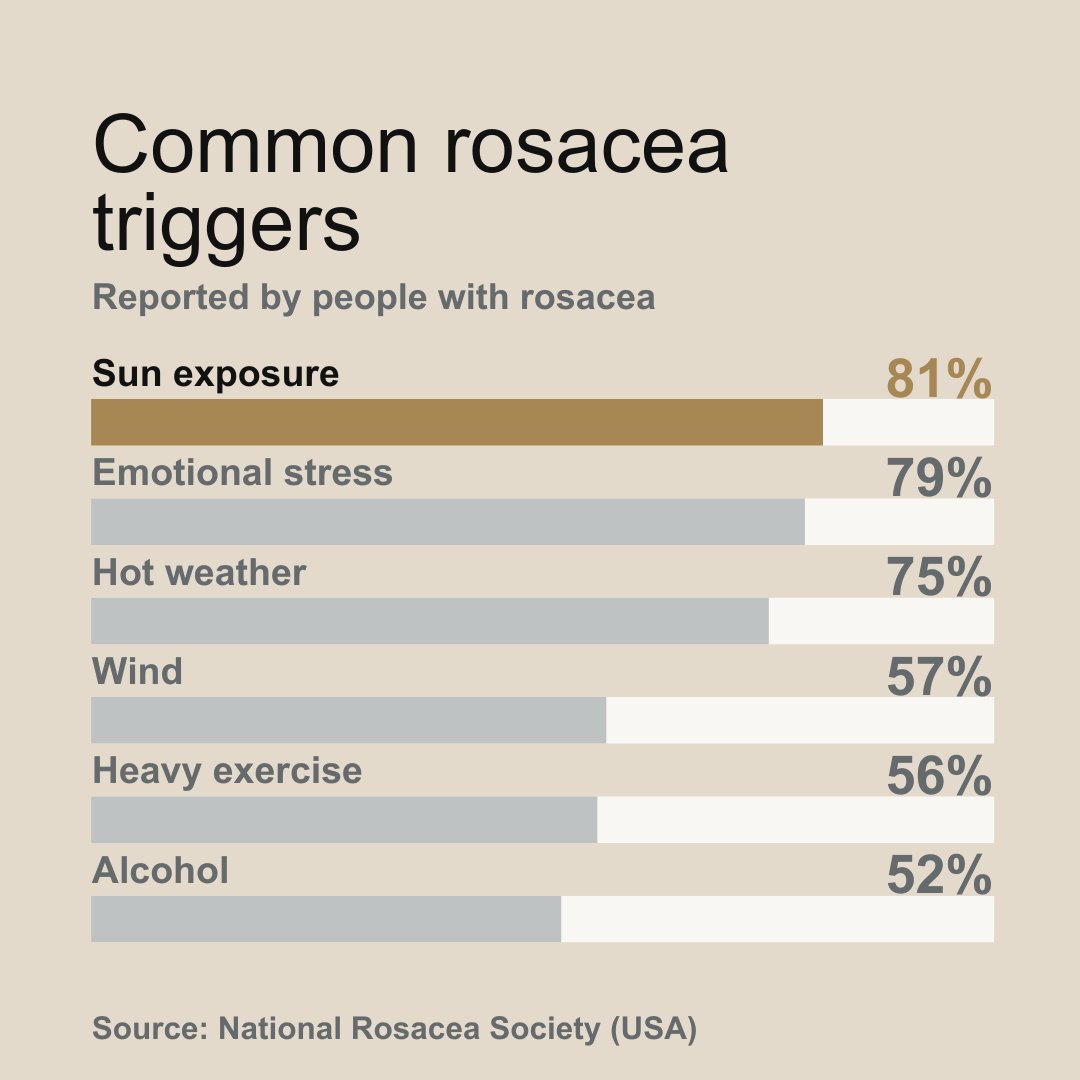
On top of this underlying tendency, triggers are everyday factors that bring on flares in people who already have rosacea. Triggers vary from person to person, and the aim is not to avoid everything on a generic list but to identify the factors that reliably flare your own skin.
Common triggers include:
- Sun exposure — one of the most common triggers, often within minutes or hours
- Weather — cold, wind, heat and humidity
- Heat — hot environments, hot food and hot drinks
- Cold — cold environments and cold drinks affect some people
- Emotional stress and anxiety
- Exercise — sweat and heat can flare symptoms
- Alcohol, spicy food and caffeine
Book in with us
Ready to get started? Book a consultation with our team at Midland Skin. Friendly, expert advice tailored to you.
How to reduce rosacea symptoms?
Simple daily changes can reduce flares and make medical treatment work better.
Use gentle skincare
Avoid harsh cleansers, scrubs, exfoliating acids, toners, peels and too many active ingredients if they irritate your skin. You can read more about skincare tips for rosacea and find out product recommendations here.
Protect against sun exposure
Use a high-factor broad-spectrum sunscreen, wear a hat and avoid prolonged direct sun where possible.
Identify your triggers
Alcohol, heat, spicy food, stress, exercise and weather changes can worsen symptoms in some people, but triggers vary.
Avoid steroid creams unless supervised by a dermatologist
Steroid creams used on the face can worsen rosacea-like rashes in some patients.
Get the diagnosis right
Not all facial redness is rosacea. If treatments are not working, the diagnosis may need reviewing.
Skin conditions that may look like rosacea
Several conditions can mimic rosacea, including acne, seborrhoeic dermatitis, perioral dermatitis, sun damage, contact allergy, lupus, eczema and medication-related flushing.
This is one reason a dermatology assessment is helpful. The right treatment depends on whether the problem is inflammatory rosacea, acne, eczema, allergy, sun damage, thread veins, hormonal flushing or a combination of causes.
Read more about the different causes of redness of the face →
Acne
Acne and rosacea can look very similar because both cause red spots, inflammation and pustules on the face, and in some people both conditions occur together. The distinction matters because the treatments are different — some acne treatments can irritate rosacea-prone skin and make redness or sensitivity worse.
Read more about acne and rosacea →
Menopause related flushing
Rosacea and menopause can overlap because both can cause flushing, heat in the face, facial redness, dryness and skin sensitivity, and the timing often coincides as rosacea commonly affects adults in midlife. Telling them apart matters because hormonal treatment may help menopausal hot flushes but does not treat rosacea-related redness, thread veins or skin sensitivity.
Scarlett Greenwood
Treatment pathway for rosacea
Initial Dermatology Assessment
Your dermatologist will evaluate your skin, symptoms, triggers, skincare, previous treatments and medical history. The aim is to understand the main pattern of rosacea and agree the best next step.
Diagnosis and investigations, if needed
Rosacea is usually diagnosed clinically. If the diagnosis is unclear or your symptoms are not behaving as expected, your dermatologist may recommend targeted tests.
Treatment plan
A treatment plan may be provided at the initial assessment or after a review consultation, depending on the diagnosis, complexity and whether further information is needed. Treatment is tailored to your main concerns, such as spots, redness, flushing, thread veins or sensitive skin.
Review consultation
Your response to treatment is assessed at a review consultation, where adjustments to treatment are made if necessary. This helps ensure the plan is working and allows treatment to be refined as your skin responds.
Long-term control
Rosacea is usually managed rather than cured. Some patients need short courses of treatment, while others benefit from regular reviews or maintenance laser/BBL if redness or flushing returns.
Laser and BBL treatment for rosacea redness
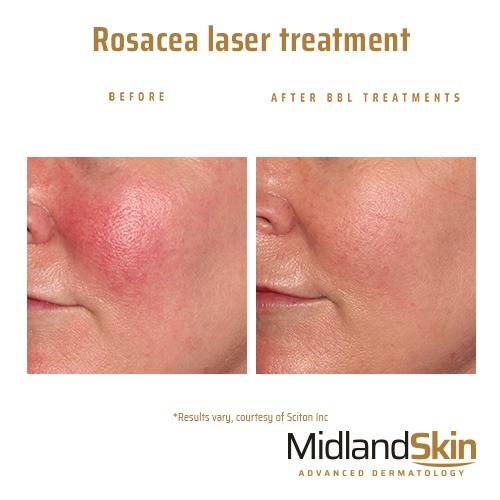
Creams and tablets can improve spots, inflammation and sensitivity, but they often do very little for fixed redness and visible blood vessels. Laser and BBL treatments target the vascular component of rosacea directly, helping to reduce background redness, thread veins and facial flushing.
Modern vascular lasers and advanced broadband light allow us to treat the blood vessels in the skin much more precisely than older technologies. The aim is to heat and close down selected unwanted vessels, while leaving the surrounding skin unaffected.
There are several reasons why laser and BBL treatment may be considered:
- Non-invasive — performed on the surface of the skin, with no incisions
- Precise — directed to specific areas of redness, flushing or visible vessels
- Minimal downtime — most patients return to normal activities quickly, though mild redness or swelling can occur
- May reduce the need for medications — by treating redness and visible vessels directly, laser and BBL can reduce reliance on long-term oral or topical treatment in some patients
Across published studies, between approximately 50% and 90% of patients see clinically meaningful improvement after a course of vascular laser or BBL, depending on the device used, how improvement is measured, and the severity of redness at the start.
A typical course is 5 to 7 treatments, usually spaced around a month apart. Because blood vessels sit at different depths in the skin and vary in size, the best plan may involve more than one device, wavelength or setting — and this is one of the advantages of treatment at Midland Skin, where we can combine technologies in a tailored way rather than relying on a single device for all forms of redness. Because rosacea is a long-term condition, maintenance treatments may be recommended every 6 to 12 months.
Excel V+ laser for rosacea
The Excel V+ is a vascular laser with two wavelengths (532nm and 1064nm), allowing treatment of both superficial and deeper blood vessels. This is helpful in rosacea because redness, thread veins and flushing may come from vessels at different depths and of different sizes.
Read more about Excel V+ laser →
Sciton BBL for rosacea
Sciton BBL is a form of intense pulsed light (IPL) that uses high-energy pulses of broad-spectrum light to target redness, visible vessels and uneven pigmentation. In rosacea, BBL is particularly useful for diffuse redness, flushing and background vascular change, and can also help features of sun damage where these are present alongside rosacea.
Book in with us
Ready to get started? Book a consultation with our team at Midland Skin. Friendly, expert advice tailored to you.
Fees for rosacea treatment
Consultation Show pricing
Book ConsultationInitial dermatology assessment
Rosacea treatment costs depend on the diagnosis and the treatment plan recommended after consultation. Some patients need prescription treatment and skincare advice only. Others may benefit from laser, BBL, flushing treatment or rhinophyma treatment.
Laser/BBL treatment Show pricing
Book ConsultationLaser redness / thread vein reduction programme – Small area
Laser redness / thread vein reduction programme – Intermediate area
Laser redness / thread vein reduction programme – Full face
Botulinum toxin Show pricing
Book ConsultationBotox – Flushing / redness
Additional treatments for flushing
Flushing can be one of the most difficult rosacea symptoms to control, and it does not always respond fully to skincare, trigger management or laser and BBL alone. Where appropriate, additional treatments may be considered alongside the rest of the treatment plan.
Prescription medications. Oral medications, such as low-dose beta-blockers, can reduce the frequency and intensity of flushing in selected patients by dampening the cardiovascular response that drives the flush. Topical treatments such as brimonidine can temporarily reduce facial redness, although the effect is short-lived and not suitable for everyone.
Botulinum toxin. Very small amounts of botulinum toxin can be placed into the skin — rather than into the muscles, as in wrinkle treatment — to reduce nerve signalling to the small blood vessels in the skin. In suitable patients, this may reduce flushing and persistent redness for around 3 to 6 months, and treatment can be repeated.
The choice between these options depends on the pattern of flushing, the underlying triggers, other rosacea features, your general health and any medications you already take. Your dermatologist will discuss which approach, if any, is appropriate for you.
Scarlett Greenwood
Other features of rosacea including thread veins, rhinophyma, ocular rosacea
Thread veins
Visible thread veins are common in rosacea, especially around the nose, cheeks and chin, and they often do not respond to creams because they are structural blood vessels in the skin. Laser and BBL can target these vessels directly, with the number of sessions depending on the size, depth and number of vessels.
Read more about thread vein removal →
Rhinophyma
Rhinophyma is thickening and enlargement of the skin of the nose that can develop in some people with rosacea, sometimes gradually and without obvious inflammatory spots. Once established, creams and tablets cannot reverse the tissue change, and treatment usually involves laser resurfacing to reshape the nose and reduce excess tissue.
Read more about rhinophyma treatment →
Ocular rosacea
Rosacea can affect the eyes as well as the skin, causing dryness, grittiness, burning, watering, redness, eyelid inflammation or recurrent styes. If eye symptoms are present, your dermatologist may recommend eyelid care, oral treatment, or referral to an ophthalmologist for ongoing management.
References used for this article
- Schaller M, Almeida LMC, Bewley A, et al. Recommendations for rosacea diagnosis, classification and management: update from the global ROSacea COnsensus 2019 panel. British Journal of Dermatology. 2020;182(5):1269–1276. https://pubmed.ncbi.nlm.nih.gov/31392722/
- Thiboutot D, Anderson R, Cook-Bolden F, et al. Standard management options for rosacea: the 2019 update by the National Rosacea Society Expert Committee. Journal of the American Academy of Dermatology. 2020;82(6):1501–1510. https://pubmed.ncbi.nlm.nih.gov/32035944/
- van Zuuren EJ, Arents BWM, van der Linden MMD, Vermeulen S, Fedorowicz Z, Tan J. Rosacea: new concepts in classification and treatment. American Journal of Clinical Dermatology. 2021;22(4):457–465. https://pubmed.ncbi.nlm.nih.gov/33759078/
- Dağtaş BB, Erdem O, Güneç Tİ, Avcı EB, Manav V, Koku Aksu AE. Effects of Botulinum Toxin Type A Treatment on Clinical and Biophysical Parameters in Patients With Erythematotelangiectatic Rosacea: A Prospective, Randomized, Controlled, Double-Blind Study. Dermatol Surg. 2025 May 1;51(5):515-521.
- Nguyen L, Sorbe C, Seeber N, Schneider SW, Herberger K. Laser and energy-based devices for treating rosacea — a systematic review and network meta-analysis. J Dtsch Dermatol Ges. 2026;24(1):24–32. https://pubmed.ncbi.nlm.nih.gov/41273013/
About the Author
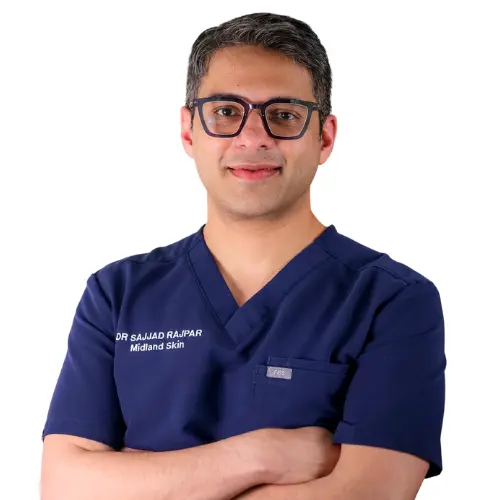
This page has been written and/or medically reviewed by Dr Sajjad Rajpar, Consultant Dermatologist and Medical Director of Midland Skin, Birmingham.
Dr Rajpar is on the GMC Specialist Register in Dermatology and has over 20 years’ experience in clinical dermatology. He provides clinical oversight to ensure the information on this page is accurate, balanced and consistent with current dermatology practice.
Dr Sajjad Rajpar
Date last updated: 21st May 2026
Book in with us
Expert, consultant led care in dermatology, skin surgery, eyelid surgery, lasers and aesthetics.
Disclaimer
The content on this website is provided for general information only. It is not, and must not be treated as, medical advice, a diagnosis, or a recommendation for any particular treatment. We make reasonable efforts to keep information accurate and up to date, but medicine and technology change, and content may not reflect the most current evidence, guidance, product information, or individual practice. You should not rely on this website to make decisions about your health or treatment. Always seek personalised advice from an appropriately qualified healthcare professional. Any examples, images, testimonials, and outcome descriptions are illustrative only. Results vary between individuals and no outcome can be guaranteed.


