
Mole checks & head to toe skin check


Quick Facts about Mole Checks

Best for
Skin cancer screening

Examination
Dermoscopy

Duration
20 minutes

Repeat
Every 12 months

Consultant
Dermatologist

Price
See below
What is a mole check and head to toe skin check?
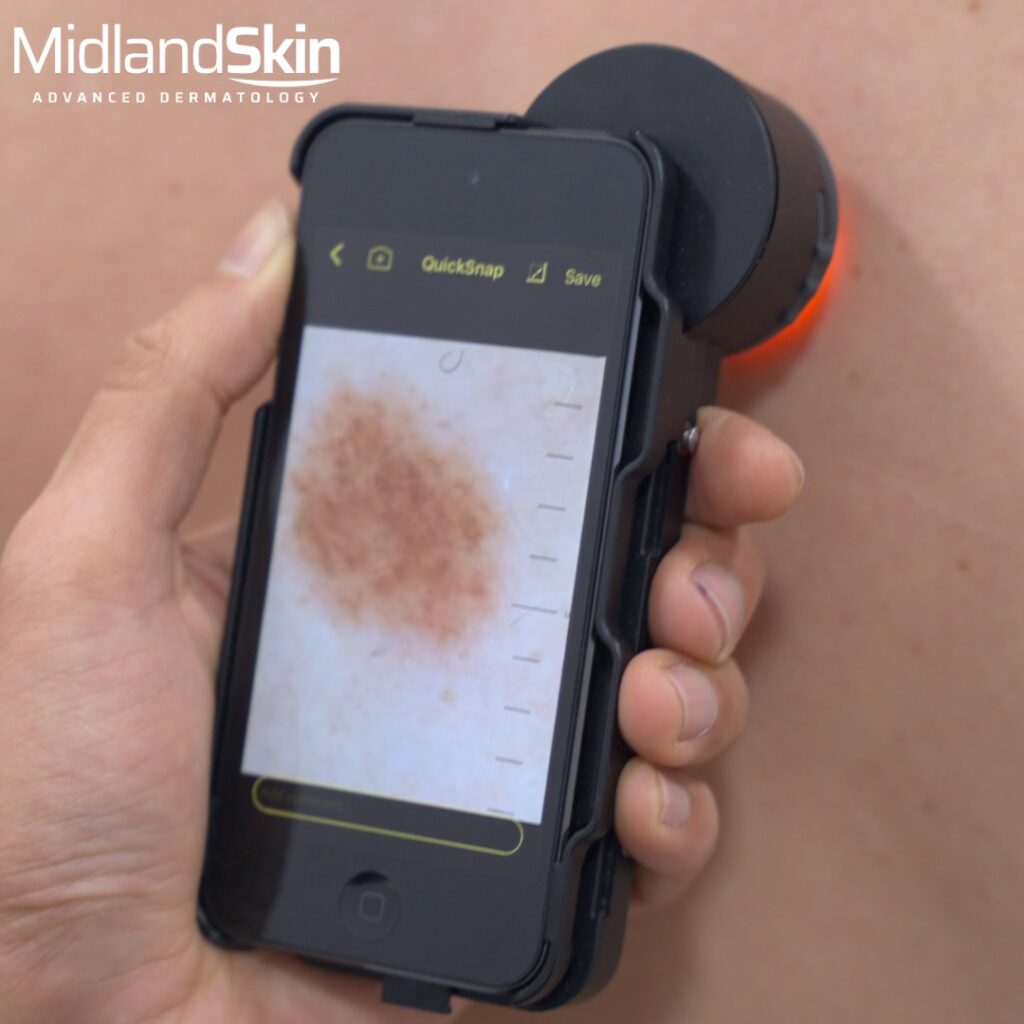
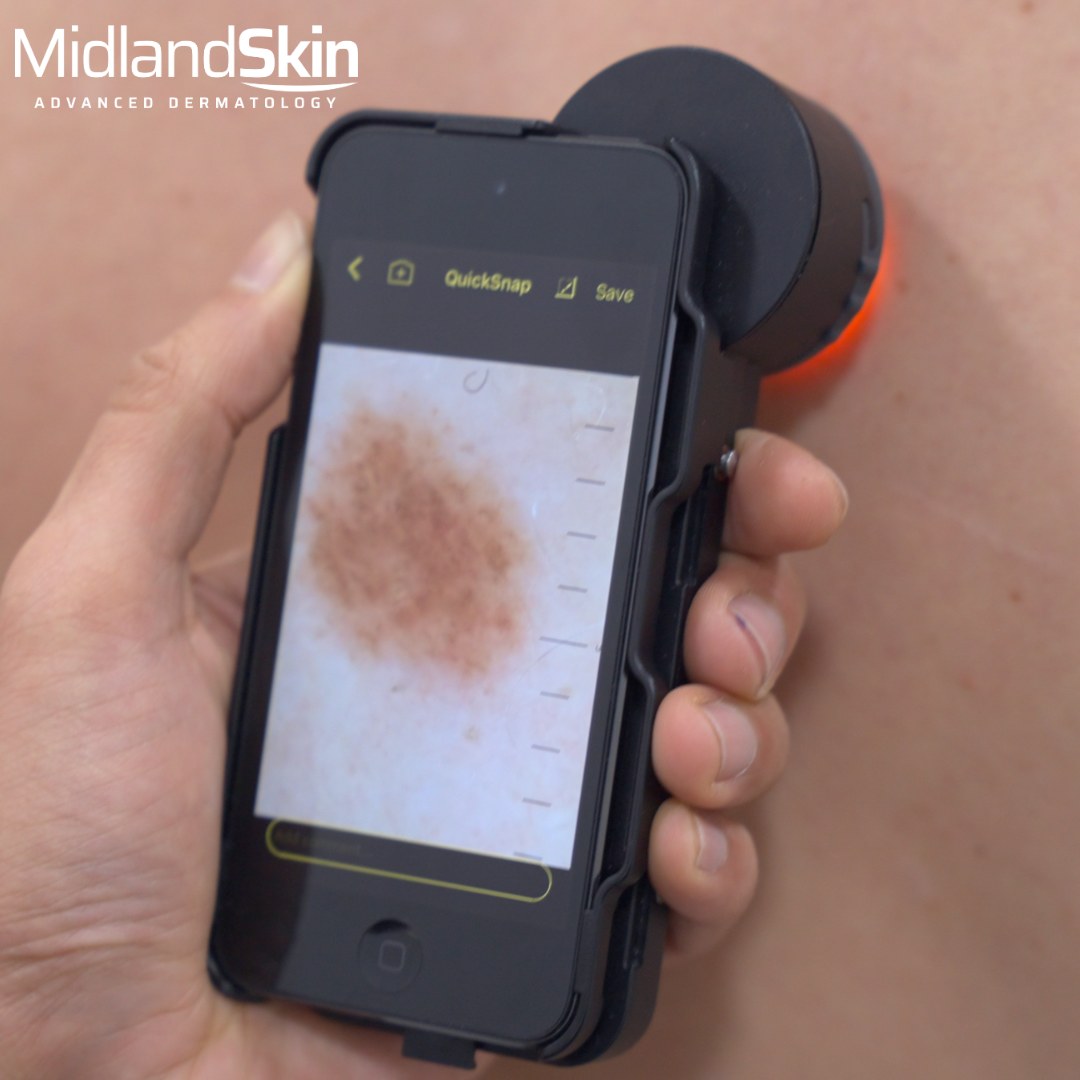
A mole check is a specialist examination of your moles and other skin lesions, carried out by a Consultant Dermatologist using a dermatoscope — a handheld device that magnifies and illuminates the skin, allowing detailed assessment of structures not visible to the naked eye. It is the most reliable way to have a mole assessed accurately.
We offer two types of appointment: a targeted assessment of one or more specific lesions you are concerned about, and a full head-to-toe skin cancer screen in which all moles and other lesions are examined systematically. In some cases both are carried out in the same session. Your Consultant Dermatologist will advise what is appropriate for you. If a lesion requires removal or biopsy, this can in many cases be arranged on the same day.
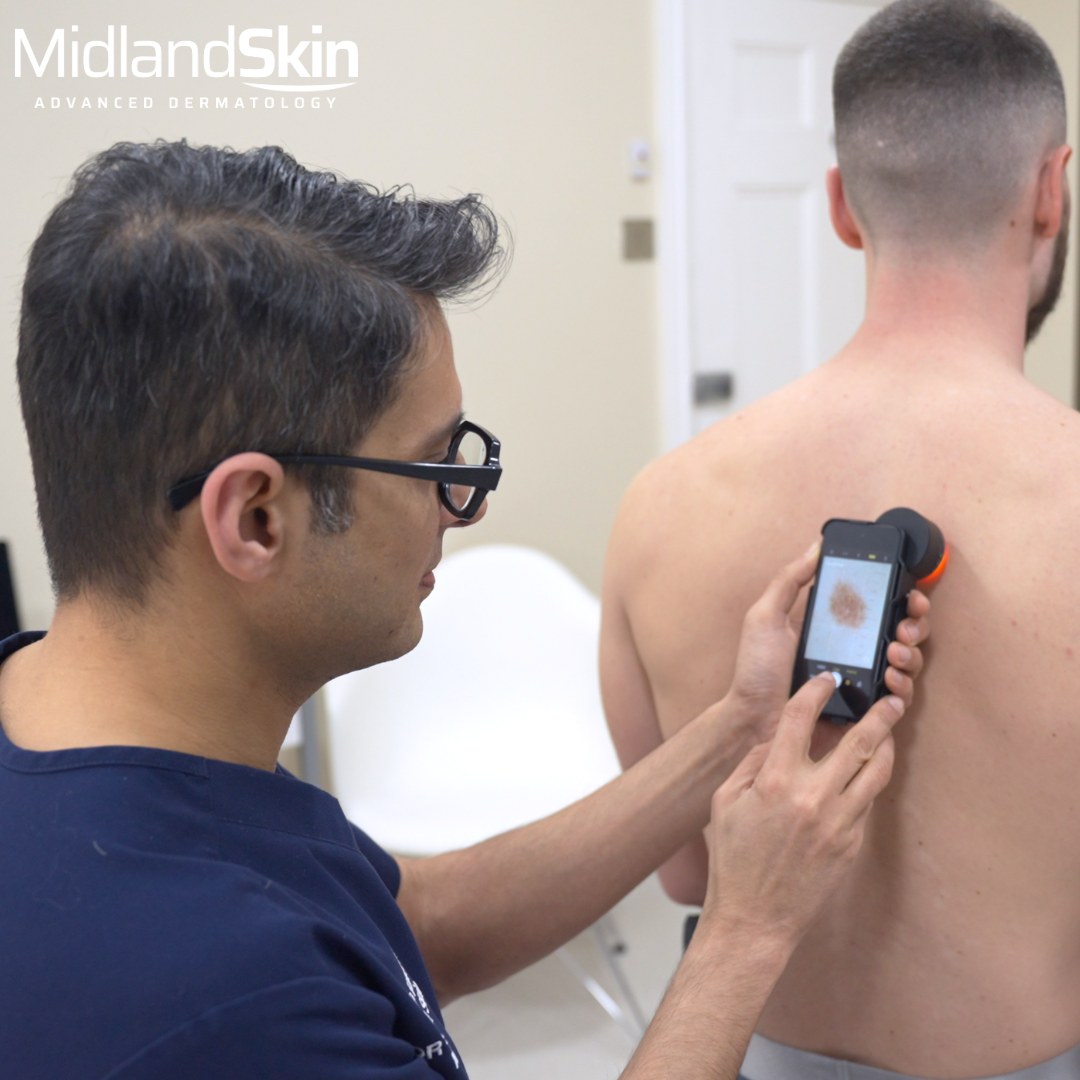
Mole check pictures
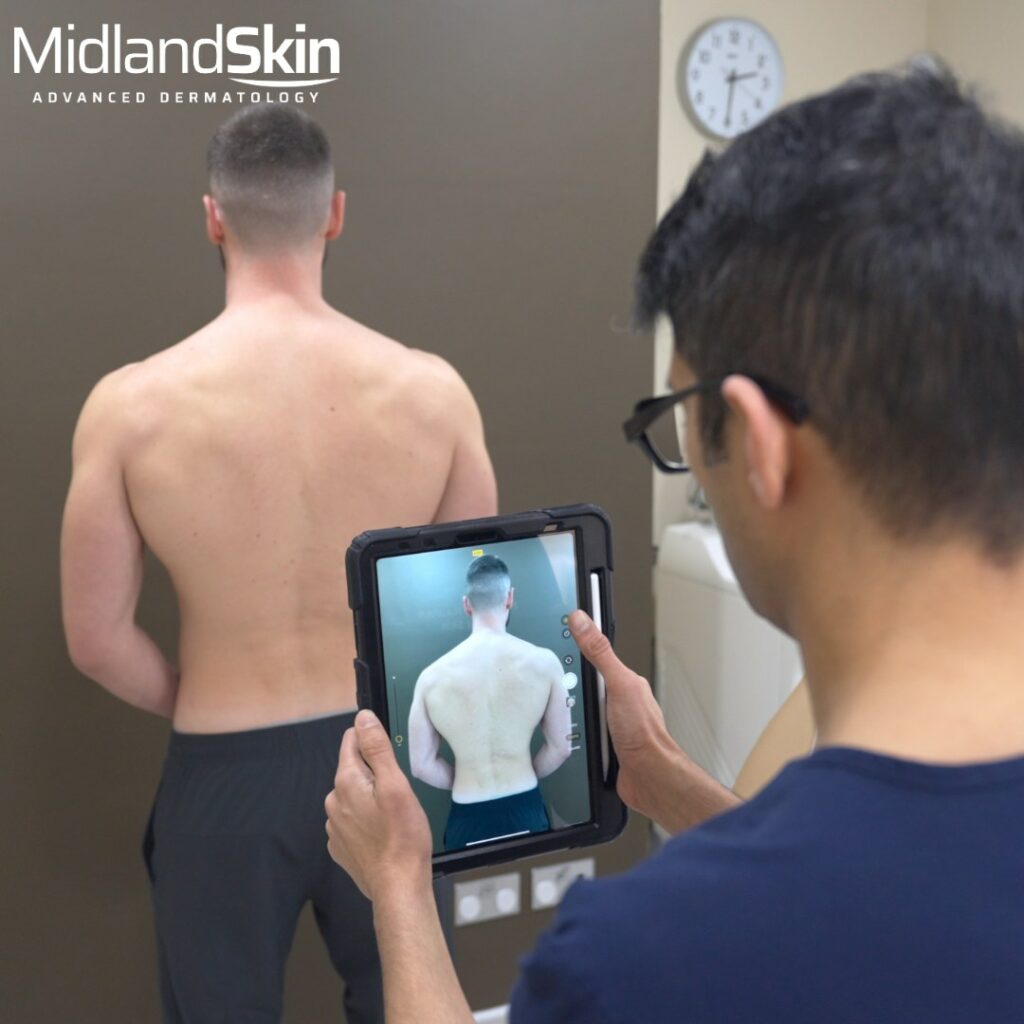
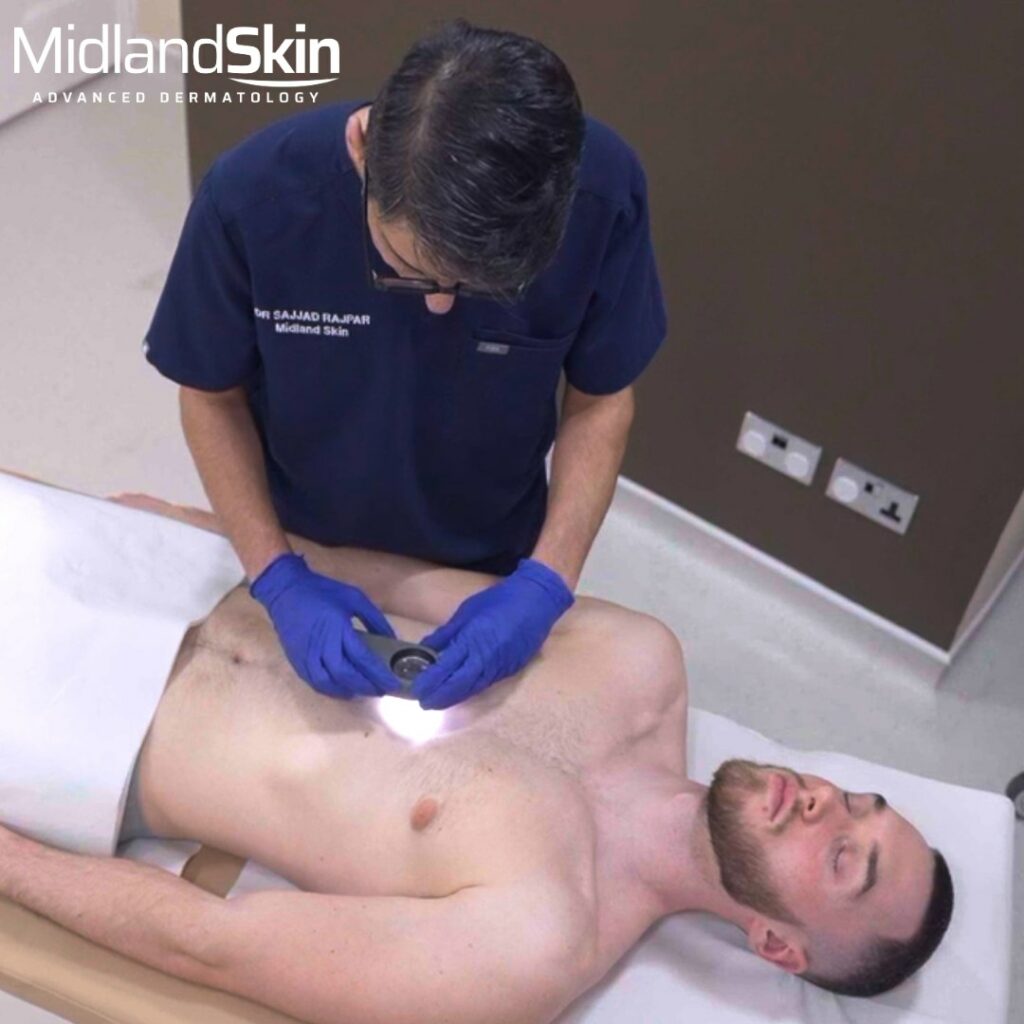
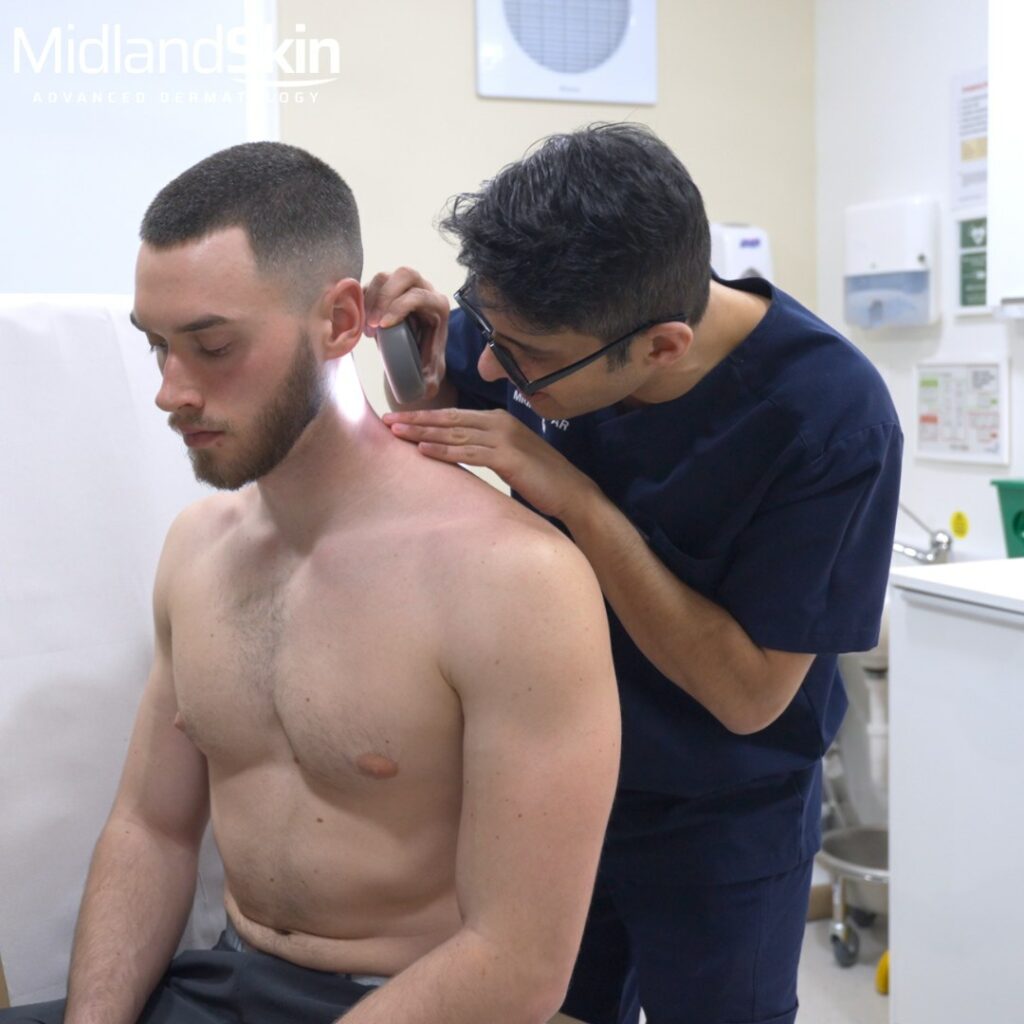
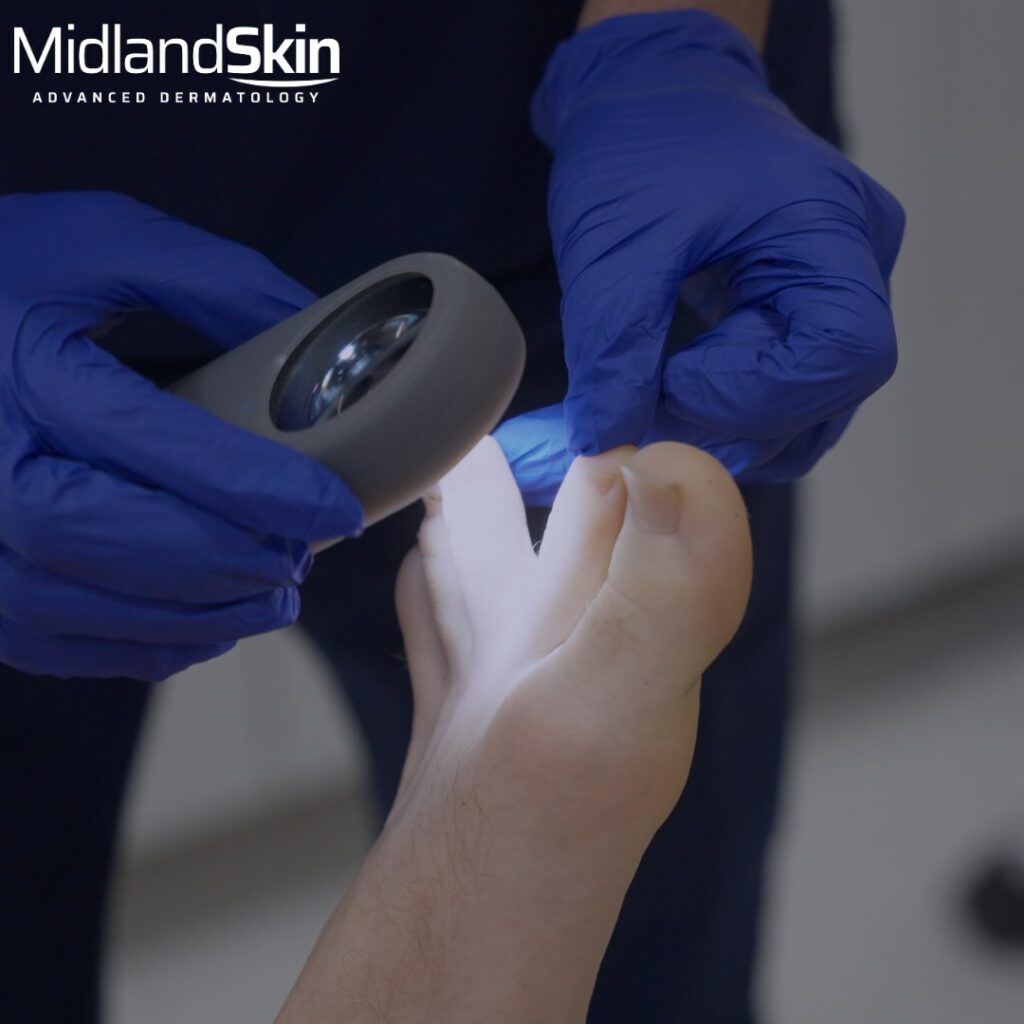
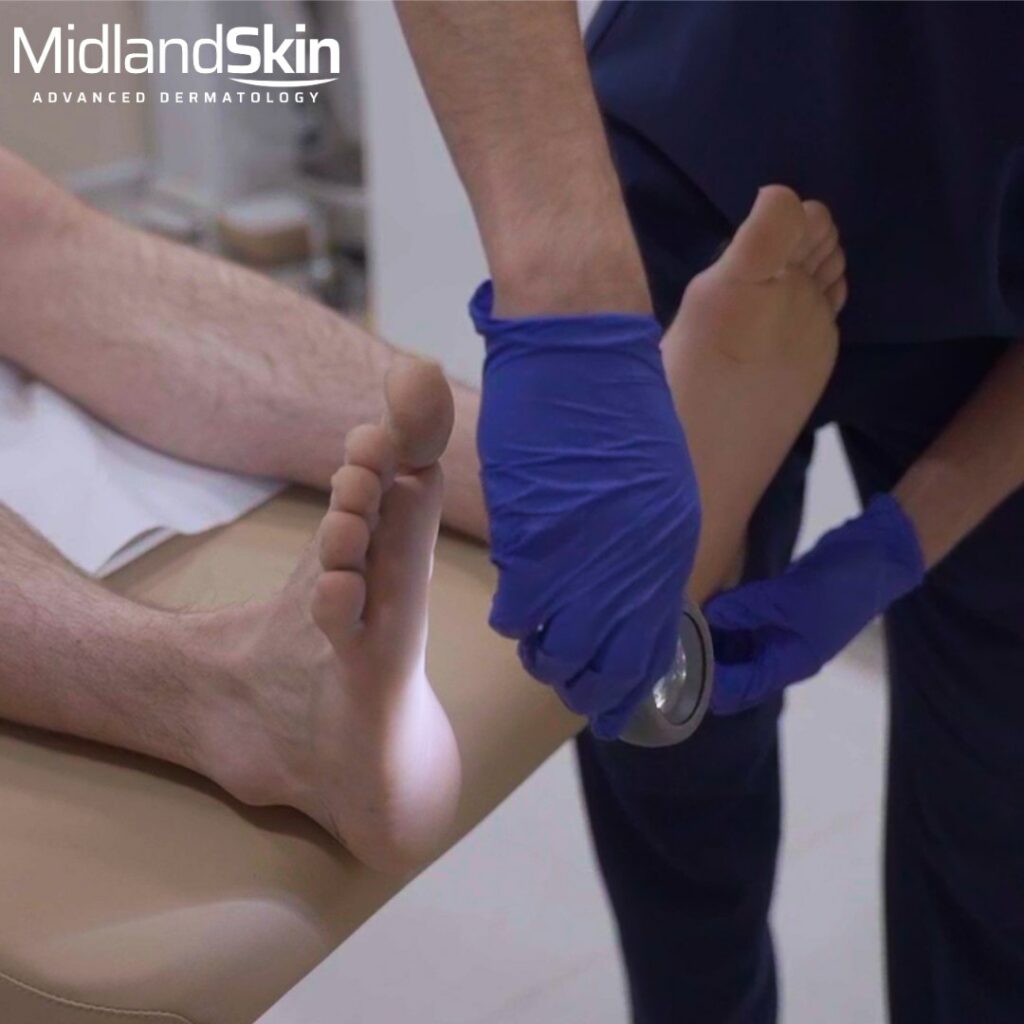
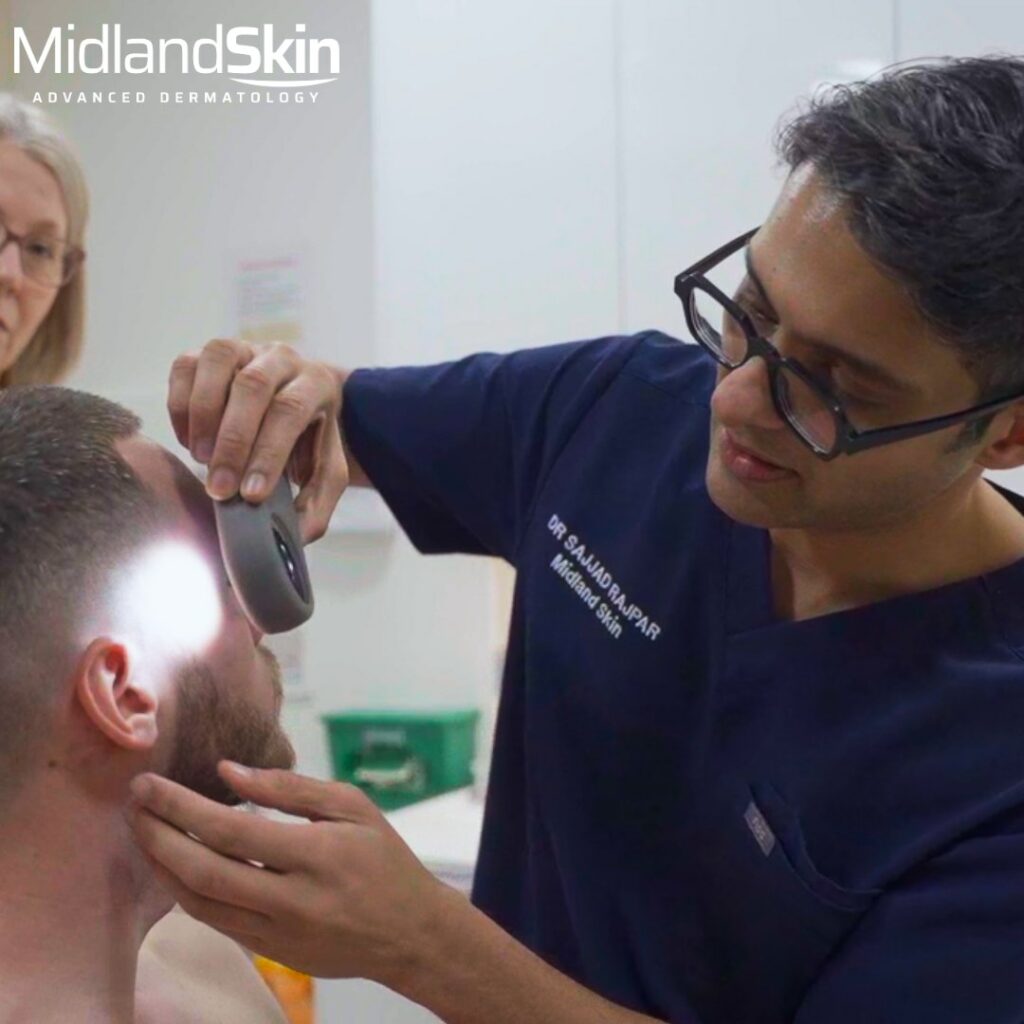
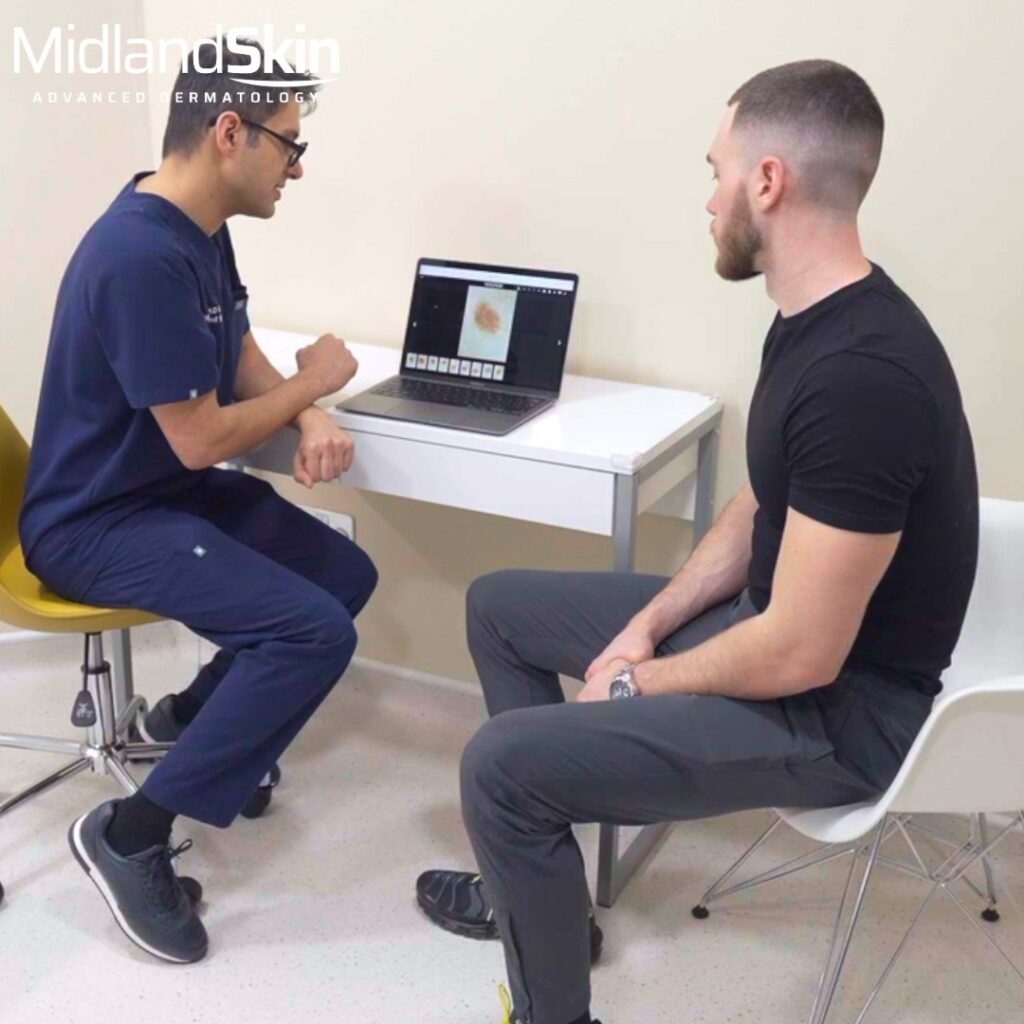
What happens during a mole check?
When you arrive, your Consultant Dermatologist will take a history, asking about any moles you are concerned about, relevant risk factors, and any personal or family history of skin cancer.
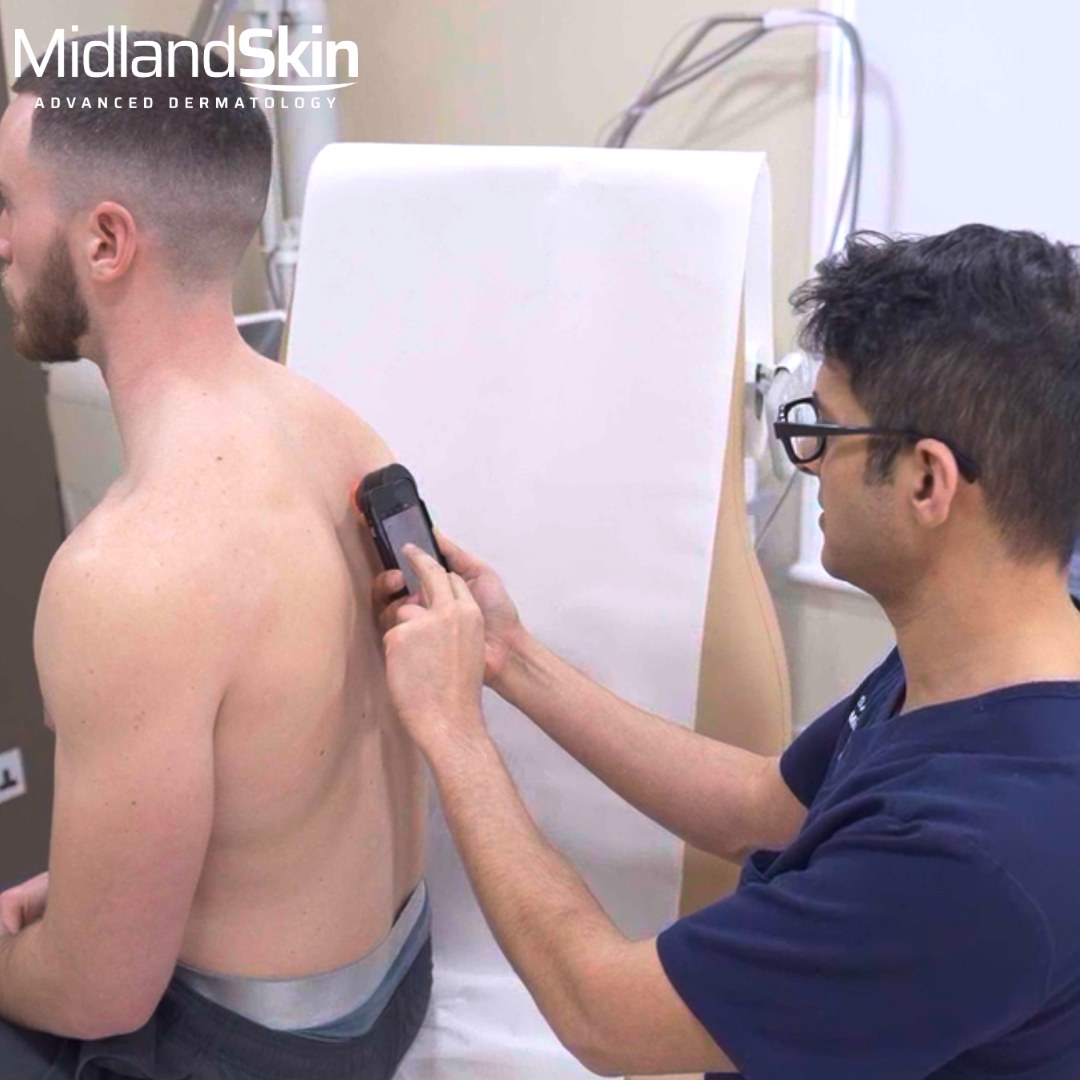
You will then be asked to undress to whatever level you feel comfortable with. A privacy drape is provided, and a trained clinic assistant is always present as a chaperone throughout the examination.
The Consultant Dermatologist examines your skin systematically from head to toe, first by eye and then under the dermatoscope — a handheld instrument that illuminates and magnifies the skin to around ten times its normal size, allowing detailed assessment of pigment patterns with polarised light such that structures beneath the surface can be seen. It rests gently against the skin and is completely painless.
Any lesions that appear abnormal or warrant further attention are pointed out to you, discussed, and photographed for your clinical record. At the end of the examination, your Consultant Dermatologist will explain their findings and agree a plan with you — whether that is reassurance, monitoring, or same-day removal.

Scarlett Greenwood

Book in with us
Ready to get started? Book a consultation with our team at Midland Skin. Friendly, expert advice tailored to you.
What is the difference between a mole check and mole mapping?
Mole mapping usually refers to a photography-based screening service. Photographs are taken of the whole body, with close-up images of selected moles or skin marks that appear unusual. The person taking the photographs is usually a trained imaging technician or healthcare professional, but is not usually a Consultant Dermatologist and may not be the clinician who reviews the images. The images may then be assessed electronically by artificial intelligence, a dermatologist, or another skin specialist, often remotely.
Mole mapping can be helpful, especially when good-quality photographs are available for comparison over time. However, it is important to understand that photography-based mole mapping is not the same as a full in-person skin examination with a Consultant Dermatologist.
What can a face-to-face mole check assess that mole mapping may miss
- Difficult-to-photograph areas: Some areas of the body are difficult to photograph properly, including the scalp, tops and backs of the ears, groin, soles of the feet, between the toes, and under the nails. These areas can be examined properly during an in-person mole check.
- Incidental skin cancers. Photography-based services usually assess the images submitted to them by the operator. If a lesion has not been photographed clearly, or has not been selected for close-up imaging, it may not be assessed in detail. During a face-to-face consultation, the dermatologist examines the skin directly and can identify unrelated or unexpected lesions elsewhere on the body.
- Contextual assessment of all your moles and skin. An experienced Consultant Dermatologist does not assess each mole in isolation. They compare each lesion against the pattern of all your other moles and your skin in general. A mole that looks different from your own usual pattern — known as the “ugly duckling” sign — can be an important warning sign and is best assessed during a face-to-face whole-body examination.
- Inclusion of pink, red or skin-coloured lesions. Photography-based mole mapping is mainly designed to assess pigmented moles. However, not all skin cancers are brown or black. Some melanomas are pink, red, skin-coloured, or only lightly pigmented. These are known as amelanotic melanomas. Non-melanoma skin cancers, such as basal cell carcinoma and squamous cell carcinoma, may also be pink, red, scaly, crusted, or non-pigmented. In-person dermoscopy allows the dermatologist to assess blood vessel patterns and other structures, even when pigment is absent.
- Assessment of symptoms, not just appearance. Symptoms such as itching, bleeding, tenderness, crusting, or a new sensation in a mole can be clinically important, even if the lesion does not look especially worrying in a photograph.
- Precancerous skin lesions. A Consultant Dermatologist can also identify and assess precancerous skin changes, such as actinic keratoses, during the examination. These may not always be the main focus of a mole mapping service.
- Immediate decision making and same-day action if treatment is needed. If a lesion looks suspicious during a Consultant Dermatologist appointment, a biopsy or removal can often be planned without needing a separate assessment first. Some precancerous lesions may also be treated at the appointment with liquid nitrogen therapy or managed with prescription treatments.
Is mole mapping still useful?
Yes. Total body photography and mole mapping can be very useful, especially for monitoring changes in the skin over time. It can be particularly helpful for patients with many moles, atypical moles, or a history of melanoma. Mole mapping is best thought of as a supplement to, rather than a replacement for, a Consultant Dermatologist mole check. If you have previous mole mapping photographs, please bring them to your appointment. They can help show whether any lesions have changed over time.
When should I be worried about a mole?
It is best to get a mole checked if it appears to be growing, becoming darker or starting to look irregular, especially if it starts standing out from the other moles. A mole that is new and looks different to other moles is also worth getting checked out. A mole that is bleeding or scabbing, or causing itch or pain should also be checked. Very occasionally moles can develop into a form of skin cancer called melanoma.
Joshua Burrows
Book in with us
Ready to get started? Book a consultation with our team at Midland Skin. Friendly, expert advice tailored to you.
Mole checks and treatments at Midland Skin Clinic
- Detailed consultation and skin analysis by a Dermatologist including a full head to toe skin check assessing all moles with Dermoscopy
- Advice on how to monitor any high risk moles
- Serial monitoring for those with large numbers of moles or at high risk of skin cancer – your Dermatologist will check your skin every 6 to 12 months
- Mole removal for cosmetic reasons or for analysis
Ashley Cooper
Treatment Pathway for Mole Check
Initial Assessment
Your Consultant Dermatologist asks about the mole or lesion you are concerned about, your risk factors, and whether you need a targeted mole check or full skin check.The skin is examined by eye and with dermoscopy. Your Consultant Dermatologist explains whether the lesion looks harmless, needs monitoring, or should be biopsied or removed.
Biopsy or removal
If a lesion is suspicious or uncertain, biopsy or removal can often be arranged on the same day. The sample is sent for histology to confirm the diagnosis.
Review Consultation
If a biopsy or removal has been carried out, a review appointment may be needed to discuss the histology result and any next steps. Your Consultant Dermatologist will also advise whether repeat mole checks are recommended, usually within 6–12 months depending on your personal risk and examination findings, or sooner if any lesions require closer monitoring.
Mole check FAQs
How long does a mole check take?
A full skin check takes up to 20 minutes. If same-day removal is carried out, additional time will be needed.
Who will carry out my mole check?
Your mole check will be carried out by a Consultant Dermatologist on the GMC Specialist Register. Our consultants have extensive NHS hospital dermatology experience in assessing moles, melanoma and skin cancers at specialist level in dedicated skin cancer clinics.
Can I have a mole check for peace of mind?
Certainly. A full skin check is a good way of having all your skin lesions checked over. Think of it much like going to the dentist every year for a check up.
Can I have a mole check under private medical insurance?
Midland Skin is recognised by all major UK private medical insurers, including BUPA, AXA Health, Vitality, and WPA. Contact your insurer before booking to confirm whether a dermatology consultation for mole assessment is covered under your policy. Insurers usually cover targeted assessment of one or more specific lesions you are concerned about. You may need a GP referral letter and a pre-authorisation number depending on your policy terms.
Should I book a mole check for one mole or a full skin check?
If you are worried about one specific mole or lesion, a targeted assessment may be enough. A full body skin check is more appropriate if you would like a general check up, have many moles, previous skin cancer, a family history of melanoma, significant sun damage, or multiple lesions you are unsure about.
How often should I have a mole check?
There is no single rule for how often everyone should have a mole check. The right interval depends on your personal risk.
Some people are advised to have regular checks every 6 to 12 months, especially if they have many moles, atypical moles, previous skin cancer, a strong family history of melanoma, significant sun damage, or reduced immunity. Others may only need a mole check if they notice a new or changing lesion.
Your Consultant Dermatologist will advise how often you should be reviewed after examining your skin.
What should I do before my appointment?
Make a note of any moles or lesions you are worried about, including when you first noticed them and how they have changed. If you have previous photographs or clinical letters, please bring them with you. Please attend without any make-up or nail polish on. Please come prepared for examination of the scalp, feet, toes and other less visible areas. If you have previous mole mapping photographs or clinical letters, please bring them with you.
Will I need to undress for a full skin check?
To get the most out of the assessment, most patients undress to their underwear/bra for a full skin check, but you’re welcome to undress only as much as you feel comfortable with. A privacy drape is provided throughout, and a trained clinic assistant is present as a chaperone.
Can a suspicious mole be removed on the same day?
In many cases, we can offer a same-day biopsy or removal. This depends on factors such as the size, site, and type of lesion, and whether there’s enough time within the appointment. If a same-day procedure isn’t possible, we can usually arrange one very quickly.
How long do biopsy results take?
Histology results usually take one to two weeks.
Will mole biopsy or removal leave a scar?
Yes. Any procedure that cuts the skin can leave a scar. The scar depends on the size and site of the mole, the technique used, your skin type and how you heal.
Fees for mole check
Mole check Show pricing
Book ConsultationMole check consultation
Mole removal – stitches, first lesion
Book in with us
Ready to get started? Book a consultation with our team at Midland Skin. Friendly, expert advice tailored to you.
John Osborn
About the Author
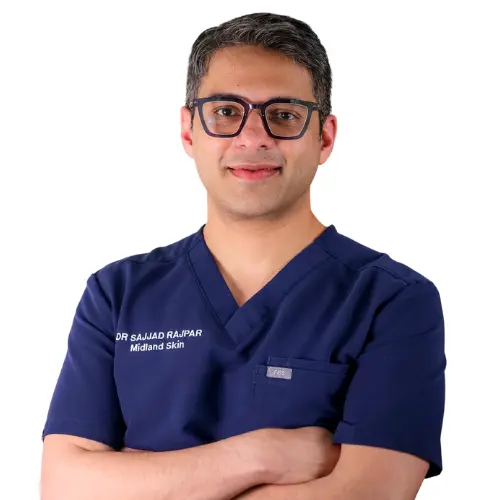
This page has been written and/or medically reviewed by Dr Sajjad Rajpar, Consultant Dermatologist and Medical Director of Midland Skin, Birmingham.
Dr Rajpar is on the GMC Specialist Register in Dermatology and has over 20 years’ experience in clinical dermatology. He provides clinical oversight to ensure the information on this page is accurate, balanced and consistent with current dermatology practice.
Dr Sajjad Rajpar
Date last updated: 20th Jun 2026
Book in with us
Expert, consultant led care in dermatology, skin surgery, eyelid surgery, lasers and aesthetics.
Disclaimer
The content on this website is provided for general information only. It is not, and must not be treated as, medical advice, a diagnosis, or a recommendation for any particular treatment. We make reasonable efforts to keep information accurate and up to date, but medicine and technology change, and content may not reflect the most current evidence, guidance, product information, or individual practice. You should not rely on this website to make decisions about your health or treatment. Always seek personalised advice from an appropriately qualified healthcare professional. Any examples, images, testimonials, and outcome descriptions are illustrative only. Results vary between individuals and no outcome can be guaranteed.


