
“`html
Droopy eyelid (ptosis) surgery in Birmingham
Consultant oculoplastic assessment and surgery for adults with a drooping upper eyelid
A droopy or heavy upper eyelid is not always caused by the same problem. It may be true ptosis, excess upper-eyelid skin, a low eyebrow or a combination of these. At Midland Skin, your oculoplastic assessment is used to identify the cause, assess the health and function of the eye and recommend the most appropriate treatment.


Quick facts about ptosis surgery

Best for
Longstanding or gradually developing adult ptosis

Anaesthetic
Usually local anaesthetic

Procedure type
Day-case eyelid surgery
Surgery time
Usually 45–60 minutes per eye
Visible recovery
Allow around 1–2 weeks

Price
See fees below
What is a droopy eyelid or ptosis?
Ptosis, pronounced “toe-sis”, is the medical name for an upper eyelid that sits lower than normal. It may affect one or both eyes. The drooping can be mild, or the eyelid may cover part of the pupil and reduce the upper field of vision.
Some people mainly notice a tired, heavy or uneven appearance. Others find themselves raising their eyebrows, wrinkling their forehead or tilting their head backwards to see beneath the eyelid. This can contribute to eye strain, forehead fatigue or brow ache.
What causes adult ptosis?
The most common form in adults is age-related ptosis. This happens because the skin, muscle and connective tissue in the eyelid become weaker and stretch over time.
Ptosis may also develop after long-term contact-lens wear, previous eye surgery or trauma. Less commonly, a drooping eyelid may be related to a nerve, muscle or other medical condition.
Congenital ptosis is present from birth and arises due to a weak eyelid lifting muscle. This can become more pronounced during adulthood as the skin and muscles weaken.
Potential benefits of ptosis surgery
- Raises an upper eyelid that sits lower than normal
- May improve the upper field of vision
- May reduce compensatory eyebrow raising, forehead fatigue or brow ache
- Can create a more open and balanced appearance
- Can be planned alongside upper-eyelid blepharoplasty where both problems are present
- The surgical approach is selected according to the cause, measurements and function of your eyelid
Who is ptosis surgery suitable for?
Ptosis surgery may be suitable for adults with a stable, longstanding or gradually developing drooping upper eyelid. Treatment may be considered for functional reasons, appearance-related concerns or a combination of both.
- Age-related ptosis – where the eyelid-lifting tendon has stretched or loosened over time
- Congenital ptosis – while present from childhood, this can become more bothersome in adulthood
- Ptosis after contact-lens wear, eye surgery or trauma
- One or both eyelids affected – including an obvious difference in eyelid height
- Reduced upper field of vision – where the eyelid partly obstructs the pupil
- Compensatory forehead movement – such as repeatedly raising the eyebrows or tilting the head back
- Appearance-related concerns – including a tired, heavy or uneven appearance
Why choose Midland Skin in Birmingham for ptosis surgery?
Ptosis surgery takes place close to the eye and must balance eyelid height, movement, eye closure, comfort and appearance. It is therefore important to establish exactly why the eyelid is drooping before deciding which operation, if any, is appropriate.
At Midland Skin, adults with droopy-eyelid concerns are assessed by Miss Reena Kumari, Consultant Ophthalmologist and fellowship-trained Oculoplastic, Lacrimal and Orbital Surgeon. Her combined expertise in ophthalmology and oculoplastic surgery allows both the health of the eye and the function and appearance of the eyelids to be considered.
Your assessment considers more than eyelid appearance
- The history and timing of the eyelid droop
- The position and contour of both upper eyelids
- The strength and movement of the eyelid-lifting structures
- Eye movements, pupils and relevant aspects of eye health
- Dry-eye symptoms and how completely the eyelids close
- Whether excess skin, brow descent or another eyelid condition is contributing
- Your functional concerns, preferred outcome and tolerance for surgical risk and recovery
Measurements and clinical photographs are taken where relevant. Visual-field testing or further ophthalmic or medical investigation may sometimes be recommended before a final treatment decision is made.
Where surgery is appropriate, your treatment is planned individually rather than applying the same operation to every drooping eyelid. Procedures are carried out at our CQC-registered clinic in Birmingham.
What is the difference between ptosis and excess upper-eyelid skin?
“Droopy eyelids” is a general description rather than a diagnosis. Several different problems can create a heavy or hooded upper-eyelid appearance, and the correct treatment depends on which structures are responsible.
True upper-eyelid ptosis
With true ptosis, the edge of the upper eyelid itself sits too low. The operation is designed to adjust the muscle or tendon responsible for lifting the eyelid. This is known as ptosis repair or ptosis correction.
Excess upper-eyelid skin
Loose or excess skin can hang over the natural eyelid crease and create hooding even when the eyelid margin is at a normal height. This is known as dermatochalasis and is treated with an upper-eyelid blepharoplasty, rather than ptosis repair alone.
A low eyebrow or brow ptosis
A low eyebrow can push skin down over the upper eyelid. In some patients, brow descent is the main problem or contributes alongside excess skin or ptosis.
It is common for more than one of these changes to be present. Some patients benefit from ptosis repair alone, some from blepharoplasty, and some from a combined procedure. Your surgeon will explain which finding is causing your concern and what each proposed procedure is intended to address.

Scarlett Greenwood

Book in with us
Ready to get started? Book a consultation with our team at Midland Skin. Friendly, expert advice tailored to you.
Treatment journey for ptosis surgery
Oculoplastic assessment
You meet your consultant oculoplastic surgeon, who takes your history, examines your eyes and eyelids, takes relevant measurements and identifies whether the concern is true ptosis, excess skin, brow descent or a combination.
Personalised surgical plan
Where surgery is suitable, you receive an individual care plan explaining the proposed procedure, whether one or both eyelids are involved, the intended benefits, limitations, recovery, risks, follow-up and costs. Surgery is arranged for a separate date after you have had time to consider the information.
Ptosis surgery
Surgery is usually performed as a day-case procedure under local anaesthetic. The eyelid-lifting structures are adjusted through an incision in the natural eyelid crease or, in selected cases, from inside the eyelid.
Follow-up and recovery
You attend planned postoperative reviews so healing, eye comfort, eyelid closure, height and contour can be assessed. Swelling must settle before the final result can be judged accurately.
Book in with us
Ready to get started? Book a consultation with our team at Midland Skin. Friendly, expert advice tailored to you.
On the day: what to expect FAQs
Can ptosis surgery be carried out on the same day as my assessment?
No. Your initial appointment is an oculoplastic assessment. Surgery is only recommended after your surgeon has examined your eyes and eyelids, established the likely cause of the drooping and discussed the intended benefits, limitations, risks, recovery and alternatives. Where surgery is suitable, it is arranged for a separate date so that you have time to consider the proposed treatment.
What should I do before I arrive for surgery?
Follow the preparation instructions supplied with your surgical plan. Tell the clinic about all medicines, supplements and allergies, particularly anticoagulant or antiplatelet medicines such as warfarin, apixaban, rivaroxaban, aspirin or clopidogrel. Do not stop prescribed medication unless the prescribing clinician and your surgeon have confirmed that it is safe to do so.
Unless advised otherwise, arrive without eye make-up, false eyelashes or contact lenses. Arrange for a responsible adult to collect you and follow any specific instructions about eating, drinking or sedation.
What happens when I arrive?
Your identity, procedure, consent and medical information are checked. The surgeon examines the eyelids again, confirms the operative plan and may take further measurements or clinical photographs. The intended eyelid crease or surgical area is marked before local anaesthetic is given.
What type of anaesthetic is used?
Adult ptosis surgery is usually carried out under local anaesthetic as a day-case procedure. Anaesthetic drops may be placed in the eye and local anaesthetic is injected into the eyelid. Remaining awake allows the surgeon to assess and adjust eyelid height and contour during the operation. Sedation may sometimes be considered, but this must be discussed and planned in advance.
Will the local anaesthetic or surgery hurt?
The local anaesthetic injection can sting sharply for a few seconds. Once the eyelid is numb, you should not feel sharp pain, although you may remain aware of pressure, movement or gentle pulling. Tell the surgical team if you experience pain or discomfort so that this can be addressed.
How is ptosis surgery performed?
The exact operation depends on the cause of the ptosis, the amount of drooping and how well the eyelid-lifting muscle works. In many adults, a small incision is made within the natural upper-eyelid crease and the levator muscle or its tendon is advanced, shortened or reattached to raise the eyelid. In selected cases, the operation may be performed from inside the eyelid without an external skin incision.
The surgeon may ask you to open your eyes or look in different directions so that eyelid height and contour can be assessed. The wound is then closed with stitches where required.
How long does ptosis surgery take?
Surgery commonly takes around 45–60 minutes for each eye, although this varies according to the procedure, whether one or both eyelids are treated and whether ptosis repair is combined with another operation. Your total appointment is longer because time is needed for preparation, anaesthetic and observation afterwards.
Can I drive home after ptosis surgery?
No. Your eyelid may be padded and swelling, ointment or temporary blurring can affect vision. Arrange for a responsible adult to collect you. You must not drive until your vision is clear, the swelling no longer interferes with sight and you can safely meet the legal requirements for driving. Additional restrictions apply if you have received sedation.
Will I need someone to stay with me?
You should arrange for a responsible adult to take you home. Depending on the operation, your general health, whether both eyelids were treated and whether sedation was used, you may also be advised to have someone stay with you for the first night or 24 hours.
After ptosis surgery: recovery FAQs
What will my eyelid look and feel like immediately afterwards?
Bruising, swelling, tenderness and temporary tightness are expected. The eyelid may initially look higher, lower or more uneven than expected because swelling does not settle symmetrically. The eye may also feel watery, dry or gritty, and ointment can temporarily blur vision.
How should I care for the eyelid after surgery?
You will receive personalised written aftercare instructions. These may include using prescribed antibiotic ointment, lubricating drops or ointment, keeping the wound clean and relatively dry, and using cool packs for short periods during the first few days. Wash your hands before touching the eyelid or applying medication.
Do not rub, pull or massage the eyelid unless your surgeon has specifically instructed you to do so.
How long do bruising and swelling last?
The most visible bruising and swelling commonly improve over one to two weeks, but some swelling may remain for several weeks. Sleeping with your head raised and using cool packs as advised can help during the early recovery period.
When are the stitches removed?
This depends on the type of stitch used. Some stitches dissolve, while others are removed at a postoperative appointment, commonly at around one to two weeks. Your written plan will confirm what applies to your operation.
When can I return to work?
This depends on your work and how comfortable you are with visible bruising and swelling. Many patients allow approximately one to two weeks away from public-facing work. You may require longer if your job is physically demanding or if healing is slower than expected.
When can I exercise or swim?
Avoid strenuous exercise, heavy lifting, swimming and activities that substantially increase blood pressure for a minimum of two weeks.
When can I wear contact lenses or eye make-up?
Eye make-up and contact lenses should be avoided until the wound has healed and the eye is comfortable. Eye make-up is commonly avoided for at least two weeks. Contact-lens restrictions may be longer, particularly where contact-lens wear contributed to the ptosis.
When will I see the final result?
You will see a change in eyelid height immediately, but the early appearance is affected by swelling, bruising, tightness and healing. A more reliable assessment is made after the swelling has settled over the following weeks. The scar and eyelid contour can continue to mature for several months.
Is ptosis surgery permanent?
Ptosis surgery is intended to provide a long-lasting improvement, but it cannot stop further ageing or future stretching of the eyelid tissues. The eyelid can gradually droop again, and recurrence may require reassessment or further surgery.
Will both eyelids look exactly the same?
The operation aims to improve eyelid height, contour and balance, but perfectly identical eyelids cannot be guaranteed. Natural differences between the eyes, swelling, muscle function and healing all influence the final position. Mild asymmetry may remain even after technically successful surgery.
Could I need an adjustment or further surgery?
Yes. The eyelid may remain too low, sit too high, have an uneven contour or become more noticeably different from the other side. Some problems improve as swelling settles, but an adjustment or later revision operation is sometimes required. Correcting one eyelid may also reveal previously less noticeable ptosis in the other eyelid.
When should I seek urgent help after surgery?
Follow the emergency contact instructions provided by the clinic. Seek urgent assessment if you develop worsening or severe pain, a reduction or loss of vision, rapidly increasing swelling, marked redness, the eye appearing pushed forwards, heavy bleeding, pus or excessive discharge, or if you feel acutely unwell. Serious bleeding affecting vision is very rare but requires immediate treatment.
Risks and possible complications of ptosis surgery
Ptosis surgery is commonly performed, but all eyelid operations carry potential risks. Your individual risks depend on the cause and severity of the ptosis, the operation performed, the health of the eye, previous surgery and how your tissues heal. Your surgeon will explain the risks most relevant to you and the steps taken to reduce them. You may decide not to proceed with surgery after assessment and discussion.
- Bruising and swelling: expected after surgery and sometimes present for several weeks.
- Pain or discomfort: usually mild, but tenderness, tightness, watering or a gritty sensation can occur.
- Dry eye or exposure: raising the eyelid can make it harder to close the eye completely, particularly at night. This may temporarily worsen dryness and require frequent lubricating drops or ointment. Severe exposure may require further treatment.
- Undercorrection: the eyelid may remain lower than intended or droop again after initially improving.
- Overcorrection: the eyelid may sit higher than intended. This can affect appearance and eye closure and may require treatment or further surgery.
- Asymmetry: the eyelids may remain at different heights or have different creases, even after otherwise successful surgery.
- Irregular eyelid contour: the curve of the eyelid may appear uneven or peaked and may require adjustment.
- Change in the other eyelid: lifting one eyelid can reveal or worsen a previously less noticeable droop on the opposite side.
- Lid lag or altered movement: the operated eyelid may not move down normally when looking down.
- Scarring: an external incision is normally placed within the natural eyelid crease, but the scar may remain visible, raised, uneven or discoloured.
- Infection or wound problems: uncommon, but may require antibiotics or further treatment.
- Bleeding: bleeding and haematoma can occur. Very rarely, bleeding behind the eye can threaten vision and requires emergency treatment.
- Temporary blurred vision or change in refraction: swelling, ointment, dryness or changes around the eyelid can temporarily affect vision.
- Further surgery: adjustment or revision may be required for overcorrection, undercorrection, recurrence, contour irregularity, asymmetry or another complication.
- Unsatisfactory or limited improvement: surgery aims to improve eyelid position, function and balance, but no particular functional or cosmetic result can be guaranteed.
Fees for ptosis surgery
Ptosis surgery Show pricing
Book ConsultationPtosis surgery (one lid) + follow up consultation
Ptosis surgery (both eyelids) + follow up consultation
Book in with us
Ready to get started? Book a consultation with our team at Midland Skin. Friendly, expert advice tailored to you.
References used for this article
Bacharach J, Lee W W, Harrison A R, Freddo T F. A review of acquired blepharoptosis: prevalence, diagnosis, and current treatment options. Eye. 2021;35:2468–2481.
Nichols K K et al. Topical review: an update of diagnostic and management algorithms for acquired blepharoptosis. Optometry and Vision Science. 2022;99(3):223–233.
University Hospitals Sussex NHS Foundation Trust. Ptosis (Drooping Eyelid). Reviewed April 2026.
University Hospitals of Leicester NHS Trust. Having surgery to treat a droopy upper eyelid (ptosis). 2026.
Guy’s and St Thomas’ NHS Foundation Trust. Ptosis surgery: patient information.
About the Author
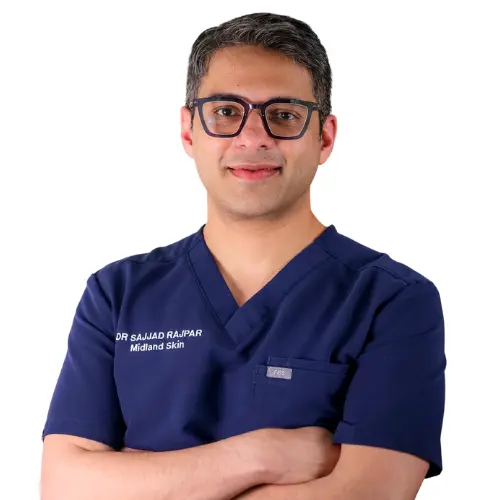
This page has been written and/or medically reviewed by Dr Sajjad Rajpar, Consultant Dermatologist and Medical Director of Midland Skin, Birmingham.
Dr Rajpar is on the GMC Specialist Register in Dermatology and has over 20 years’ experience in clinical dermatology. He provides clinical oversight to ensure the information on this page is accurate, balanced and consistent with current dermatology practice.
Dr Sajjad Rajpar
Date last updated: 18th Aug 2026
Book in with us
Expert, consultant led care in dermatology, skin surgery, eyelid surgery, lasers and aesthetics.
Disclaimer
The content on this website is provided for general information only. It is not, and must not be treated as, medical advice, a diagnosis, or a recommendation for any particular treatment. We make reasonable efforts to keep information accurate and up to date, but medicine and technology change, and content may not reflect the most current evidence, guidance, product information, or individual practice. You should not rely on this website to make decisions about your health or treatment. Always seek personalised advice from an appropriately qualified healthcare professional. Any examples, images, testimonials, and outcome descriptions are illustrative only. Results vary between individuals and no outcome can be guaranteed.
“`


