
Lipoma Removal in Birmingham
Our expert doctors offer lipoma assessment and removal in Birmingham and Solihull
At Midland Skin we offer Lipoma Removal treatment for patients in Birmingham, Solihull, Coventry, Wolverhampton, Worcester and the Midlands.


Lipoma removal in Birmingham and Solihull
If you are looking for lipoma removal, then our specialist Dermatologists are able to provide you with sound advice and excellent operating skills. Based in Birmingham, we offer lipoma removal to all those in the vicinity, including Solihull, Wolverhampton, Walsall, Sutton Coldfield, Stratford and the West Midlands.
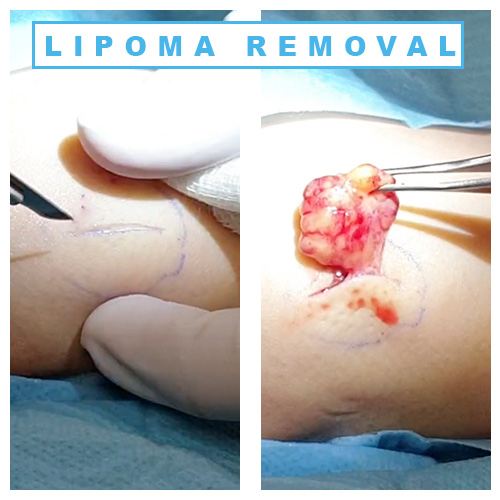
Lipoma removal is a surgical procedure that can be carried out on the forehead, scalp, arms, leg, and body. Lipoma removal is carried out while you are awake using local anaesthetic injections. Lipoma removal usually takes between 30 to 60 minutes.
Quick facts about Lipoma removal [TO UPDATE]
- You need three 45 minute treatments – one every 3 to 4 weeks
- The results get better with time and at one year there is an average reduction in inflammatory spots of 97% according to clinical studies
- There are no harmful side effects
- The treatment is safe in all skin tones and all year round
- You do not need to take long-term tablets or creams
- There can be short-lived purges which can be managed with medications
What is a lipoma?
A lipoma is a lump of fatty tissue that develops the skin. A lipoma is usually soft, but may be firm and squidgy. A lipoma may move slightly if it is pushed in one direction or another.
A lipoma develops in normal, healthy people for no particular reasons. Some people are prone to lipomas and may have more than one lipoma. Sometimes lipomas can run in families.

Scarlett Greenwood

Are lipomas cancerous?
A lipoma is an overgrowth of fat cells that clump together to form a lump. Lipomas are benign and non-cancerous.
Who does lipoma removal?
Lipoma removal is usually carried out by a Dermatologist but may also be carried out by others with training in skin surgery procedures.
When should a lipoma be removed?
There are many reasons why you might want to have a lipoma removed. Some common reasons that people choose to have lipoma removal are:
- You do not like how the lipoma looks.
- The lipoma has grown and has become very obvious and prominent
- The lipoma is causing discomfort and tenderness
- The lipoma is an awkward or sensitive area
- The lipoma is growing
- Your doctor advises you to have a lipoma removed as it is not certain clinically that you have a lipoma and, therefore the lump needs removing so it can be analysed.
Lipomas are much simpler to remove when they are smaller.
Book in with us
Ready to get started? Book a consultation with our team at Midland Skin. Friendly, expert advice tailored to you.
Will a lipoma go away on its own?
Once a lipoma has developed, it will not go away on its own. This is because a lipoma is a collection of fat cells.
Do I require any investigations or tests before removal?
It may be possible to tell a lipoma clinically before surgical removal. However, if the lump is very deep, or > 3cm, or in an anatomically or cosmetically difficult area, your doctor will ask you to have an Ultrasound Scan before a surgical procedure is carried out, in order to aid in planning surgical treatment. Sometimes an MRI Scan is also required.
Examples of when an Ultrasound scan or MRI scan is required:
- Lumps in the head and neck
- Deep lumps
- Lumps >3cm
- Lumps that are painful or growing
Lipomas can occur on the forehead, and they are frequently mistaken for cysts. Usually, the lipoma is under or in between the muscle of the forehead and can be removed using surgical techniques. An ultrasound scan is usually required before any surgical treatment.
What happens during lipoma removal surgery?
The skin overlying the lipoma is numbed using a local anaesthetic injection. Once numb, an incision is made as long as the lipoma. The lipoma is then removed and the wound is stitched together in a fine line. The scar is made as minimally obvious as possible. Stitches may be absorbable or they may be removed in 7 to 10 days after surgery.
Histology
Histology is where any tissue that is removed is sent for laboratory analysis under the microscope. All lipomas and lumps are tested in this way. This is because sometimes other lumps and bumps under the skin, which could be cancerous, can mimic a lipoma.
Scarlett Greenwood
Lipoma removal consultation
A lipoma removal consultation is an opportunity to discuss the procedure in detail with the Dermatologist who is going to be carrying out your procedure. Lipoma removal can then be planned at any time that is convenient for you.
A lipoma removal consultation will also allow the doctor to establish that the lesion is indeed a lipoma. Other types of skin lesions can mimic a lipoma, including cysts, lymph nodes and skin tumours. Your Doctor may require you to have an ultrasound scan or additional tests before surgery takes place.
What is the scar like following lipoma removal
A scar following lipoma removal is usually a fine line that is as long as the lipoma that was removed.
What is the aftercare and recovery following a lipoma removal?
For stitched wounds, the wound will take 10-14 days to heal. We ask you to be generally restful through this period by avoiding heavy exercise or anything strenuous. People can usually return to an office job the next day. A splash proof dressing is applied so you can still have showers. Stitches may be removed in 7 to 10 days time.
What are the risks of having a lipoma removal procedure?
Risks of any surgery include the development of a scar, a small risk of infection and a small risk of bleeding. Lipomas can recur in which case they can be cut out again. If lipomas are close to nerves, then there is a risk of nerve damage which could cause numbness.
How many lipomas can be treated in one session?
We are able to treat 1-4 lesions per session however this will depend on the location and size of the lesions.
Book in with us
Ready to get started? Book a consultation with our team at Midland Skin. Friendly, expert advice tailored to you.
How quickly can I go back to work and to sports after a lipoma excision?
You can return to an office-based job the next day. However, we ask you to wait 14-28 days before considering swimming, watersports, exercise where you will sweat or will cause clothing to rub against the healing wound, heavy lifting and stretching, and using saunas and steam rooms.
How can I book a lipoma removal?
If you have a lipoma you would like removed, you will be invited to attend for a skin surgery consultation where the problem can be evaluated by a Consultant specialist.
During a specialist skin surgery consultation, your concern will be thoroughly evaluated by a Consultant Dermatologist or Consultant Surgeon who is experienced in surgical procedures. This consultation provides an opportunity to discuss the potential benefits and risks of various treatment options, including surgery, in detail. If an operation is the way forwards, then a procedure can be scheduled for a later date. In some cases, you may also be referred for a scan to assist in planning a surgical procedure.
During the consultation, we will be able to provide you with an accurate price for any future procedures or treatments you may require. You can rest assured that there will not be any obligation for you to proceed with surgery.
Fees for lipoma removals and consultations can be found here.
Other skin lesions
We offer removal of moles, warts, seborrhoeic keratoses, skin tags, genital skin tags and milia cysts as well.
PRICING EXAMPLE LINK
References used for this article
About the Author
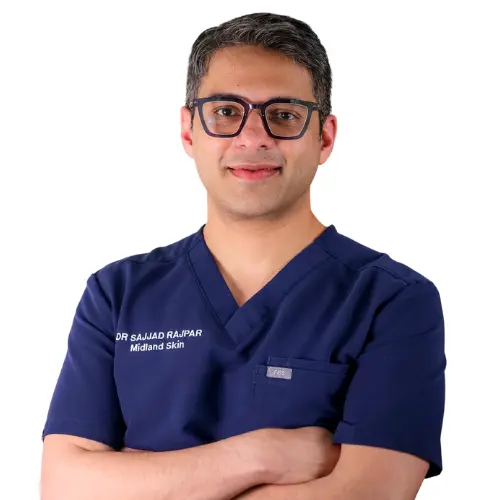
This page has been written and/or medically reviewed by Dr Sajjad Rajpar, Consultant Dermatologist and Medical Director of Midland Skin, Birmingham.
Dr Rajpar is on the GMC Specialist Register in Dermatology and has over 20 years’ experience in clinical dermatology. He provides clinical oversight to ensure the information on this page is accurate, balanced and consistent with current dermatology practice.
Dr Sajjad Rajpar
Date last updated: 10th Mar 2026
Book in with us
Expert, consultant led care in dermatology, skin surgery, eyelid surgery, lasers and aesthetics.
Disclaimer
The content on this website is provided for general information only. It is not, and must not be treated as, medical advice, a diagnosis, or a recommendation for any particular treatment. We make reasonable efforts to keep information accurate and up to date, but medicine and technology change, and content may not reflect the most current evidence, guidance, product information, or individual practice. You should not rely on this website to make decisions about your health or treatment. Always seek personalised advice from an appropriately qualified healthcare professional. Any examples, images, testimonials, and outcome descriptions are illustrative only. Results vary between individuals and no outcome can be guaranteed.


