
Rosacea and menopause
Rosacea and menopause can overlap because both can cause episodes of facial heat, flushing and redness. They are not the same condition, but they can occur at the same stage of life and may influence each other in some people.
Rosacea is a chronic inflammatory skin condition that commonly affects the central face. It can cause flushing, persistent redness, visible thread veins, inflammatory spots, burning, stinging and skin sensitivity. Menopause-related flushing is different. Hot flushes are usually part of a wider vasomotor pattern and may be associated with sudden heat in the face, neck or upper body, sweating, palpitations, chills, night sweats or sleep disturbance.
This overlap can make symptoms difficult to interpret. A woman in her 40s or 50s may notice new or worsening facial flushing and assume it is entirely hormonal. In some cases, menopause may be the main driver. In others, rosacea may be contributing. Often, both factors may be present.
Menopause does not simply “cause” rosacea in everyone, and the evidence is more nuanced than that. However, hormonal change may make facial skin feel drier, more reactive or less tolerant of skincare, heat, alcohol, sun exposure or temperature change. If the skin barrier becomes more sensitive, the threshold for rosacea symptoms such as burning, stinging, flushing and irritation may be lower.
There are useful clues. Menopause-related flushing is more likely if facial heat occurs alongside night sweats, sleep disturbance, mood change, vaginal dryness, reduced libido or irregular periods during perimenopause. Rosacea is more likely if there is persistent central facial redness, visible thread veins, inflammatory papules or pustules, facial burning or stinging, or repeated flares triggered by heat, alcohol, spicy food, sunlight, exercise or skincare products.
Treatment also differs. Menopause treatment with hormone replacement may help hot flushes, night sweats and other hormonal symptoms, but it will not usually treat rosacea-related thread veins, persistent redness, inflammatory spots or facial skin sensitivity. Similarly, rosacea treatment may improve facial redness, flushing, spots and skin discomfort, but it will not treat the wider symptoms of perimenopause or menopause.
When both are present, they usually need to be managed together. This may include treating rosacea directly, simplifying skincare, repairing the skin barrier, using daily sun protection, avoiding personal triggers where possible, and addressing menopausal symptoms separately when appropriate. A dermatologist can help identify and treat the skin component, while menopause-related symptoms may need assessment through a general practitioner or menopause specialist.
How to tell whether flushing is rosacea or menopause
The pattern of symptoms may help distinguish rosacea from menopause-related flushing, although the two can overlap.
Menopause-related hot flushes tend to come as sudden waves of heat. They may affect the face, neck, chest or whole upper body, and may be associated with sweating, palpitations, chills, night sweats or disturbed sleep. They often occur alongside other menopausal symptoms, such as hair loss, brain fog, fatigue, irregular periods during perimenopause, mood change, and skin dryness.
Rosacea flushing is more likely to be centred on the face, especially the cheeks, nose, chin and forehead. It may occur with persistent background redness, visible thread veins, inflammatory spots, burning, stinging or sensitivity to skincare. Rosacea flares are often triggered by heat, alcohol, spicy food, sunlight, exercise, stress or irritating skin products.
A useful way to think about it is this: menopause flushing is usually part of a wider body temperature and hormonal pattern, while rosacea is usually part of a facial skin pattern. In real life, both may be present.
When flushing should prompt a wider health review
Menopausal hot flushes and night sweats are common and are usually caused by changes in the body’s temperature regulation during perimenopause and menopause. For most women, they are not a sign of dangerous disease.
However, frequent, severe or persistent vasomotor symptoms may be a useful reason to review overall cardiovascular health. Research has found associations between more troublesome hot flushes or night sweats and less favourable cardiovascular risk markers, including blood pressure, cholesterol, insulin resistance and blood vessel function. Some studies have also linked severe or persistent vasomotor symptoms with a higher risk of later cardiovascular events.
This does not mean that flushing causes heart disease, or that every woman with hot flushes is at high risk. It means that troublesome menopausal flushing should not always be dismissed as “just menopause”, especially if there are other risk factors such as high blood pressure, raised cholesterol, diabetes, smoking, migraine with aura, obesity, a strong family history of early heart disease, or previous pregnancy-related complications such as pre-eclampsia or gestational diabetes.
For women with facial flushing, this can create a second layer of confusion. Menopause may cause sudden heat and sweating, while rosacea may cause facial redness, burning, stinging, visible thread veins and inflammatory spots. If flushing is frequent or severe, it may be worth managing both the skin symptoms and the wider menopause and cardiovascular health picture.
A practical approach is to consider a cardiovascular risk review through a general practitioner or menopause clinician. This may include blood pressure measurement, cholesterol testing, diabetes screening, weight and lifestyle review, and discussion of whether menopause treatment is appropriate.
How rosacea and menopause are treated when they overlap
If rosacea and menopause are both contributing to flushing, treatment usually needs to address both the skin and the wider hormonal symptoms.
For rosacea, treatment may include gentle skincare, daily sun protection, avoiding personal triggers, prescription creams or tablets, and vascular laser or intense pulsed light treatment for persistent redness and visible thread veins. The most appropriate treatment depends on whether the main problem is flushing, fixed redness, thread veins, inflammatory spots, burning or skin sensitivity.
For menopause-related symptoms, treatment may include lifestyle measures, non-hormonal options or hormone replacement therapy where appropriate. This should be discussed with a general practitioner or menopause specialist, especially if symptoms include night sweats, sleep disturbance, mood change, vaginal dryness or wider health concerns.
It is important not to assume that one treatment will solve both problems. Hormone treatment may improve menopausal hot flushes but may not improve rosacea-related thread veins, inflammatory spots or persistent facial redness. Rosacea treatment may improve facial redness and skin discomfort but will not treat night sweats, sleep disturbance or other symptoms of menopause.
The best approach is often combined care: identify the rosacea component, simplify and support the skin barrier, treat visible redness or inflammation where needed, and review menopausal symptoms separately if they are significant.
About the Author
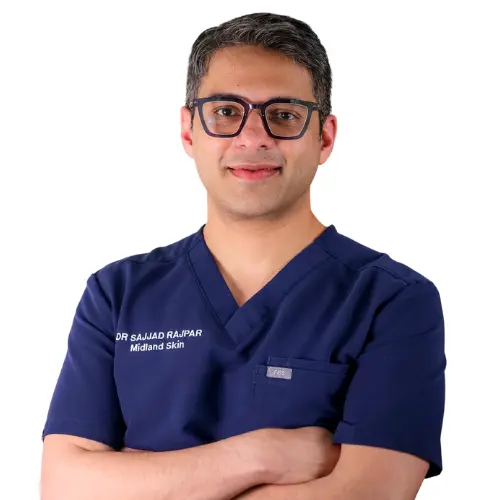
This page has been written and/or medically reviewed by Dr Sajjad Rajpar, Consultant Dermatologist and Medical Director of Midland Skin, Birmingham.
Dr Rajpar is on the GMC Specialist Register in Dermatology and has over 20 years’ experience in clinical dermatology. He provides clinical oversight to ensure the information on this page is accurate, balanced and consistent with current dermatology practice.
Dr Sajjad Rajpar
Date last updated: 18th May 2026
Book in with us
Expert, consultant led care in dermatology, skin surgery, eyelid surgery, lasers and aesthetics.


