
Acne and rosacea: how to tell the difference
Acne and rosacea can look very similar. Both can cause red spots, inflamed bumps and pus-filled lesions on the face. This is why rosacea is sometimes mistaken for adult acne, and why some patients spend months treating their skin as acne when the main problem is actually rosacea.
The two conditions can also occur together. A person may have true acne, with blocked pores and breakouts, but also have rosacea-related redness, flushing, burning or skin sensitivity. In this situation, treatment needs to address both problems without making either one worse.
The most useful difference is the presence of blocked pores. Acne commonly causes comedones, which are blackheads and whiteheads. These occur when follicles become blocked with oil and dead skin cells. Rosacea does not usually cause true comedones. Instead, rosacea is more likely to cause facial flushing, persistent redness, visible thread veins, burning, stinging, heat in the skin and sensitivity to skincare products.
The pattern can also help. Acne can affect the face, chest, back and shoulders, and may include oily skin, painful deeper spots and scarring. Rosacea usually affects the central face, especially the cheeks, nose, chin and forehead. It may flare with heat, alcohol, spicy food, exercise, stress, sunlight, hot drinks or changes in temperature.
The distinction matters because the treatments are different. Many acne treatments work by reducing blocked pores, oiliness and bacterial-driven inflammation. These may include retinoids, benzoyl peroxide, exfoliating acids or stronger cleansing routines. In rosacea-prone skin, however, these same treatments can sometimes cause irritation, dryness, burning, stinging and worsening redness, especially if introduced too aggressively.
Equally, treating rosacea alone may not be enough if true acne is also present. A patient with both conditions may need a careful plan that treats blocked pores and breakouts while protecting the skin barrier and reducing redness, flushing and sensitivity.
A dermatologist can assess whether the problem is acne, rosacea or a combination of both. This usually involves looking for comedones, the pattern of redness, flushing symptoms, sensitivity, triggers, visible thread veins, pustules, skin texture and any signs of scarring. The aim is not simply to clear spots, but to improve the skin without aggravating redness, sensitivity or long-term inflammation.
Key message
If you have adult facial spots together with flushing, burning, stinging, visible redness or sensitive skin, it may not be straightforward acne. Acne and rosacea can overlap, but they need different treatment strategies. Getting the diagnosis right can prevent months of irritation from unsuitable skincare and help build a treatment plan that is calmer, more precise and more effective.
About the Author
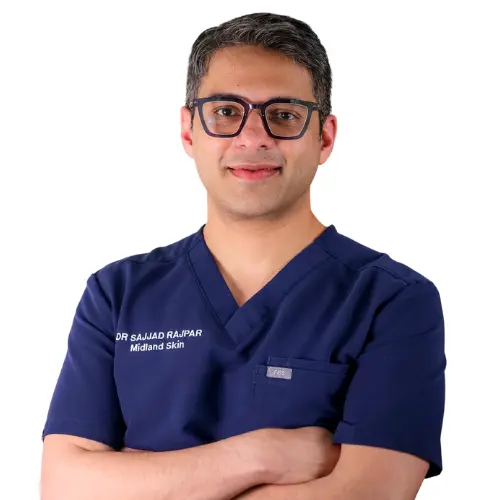
This page has been written and/or medically reviewed by Dr Sajjad Rajpar, Consultant Dermatologist and Medical Director of Midland Skin, Birmingham.
Dr Rajpar is on the GMC Specialist Register in Dermatology and has over 20 years’ experience in clinical dermatology. He provides clinical oversight to ensure the information on this page is accurate, balanced and consistent with current dermatology practice.
Dr Sajjad Rajpar
Date last updated: 18th May 2026
Book in with us
Expert, consultant led care in dermatology, skin surgery, eyelid surgery, lasers and aesthetics.


