
Mole checks


What are mole checks?
Skin cancers are becoming increasingly more common, so it is vital you examine your skin regularly and get to know your moles. Moles come in all different shapes, colours and sizes. You should alert your Doctor if you develop a new mole or if existing moles change in size, shape or colour. You should also see your Doctor if a mole begins to itch or bleed.
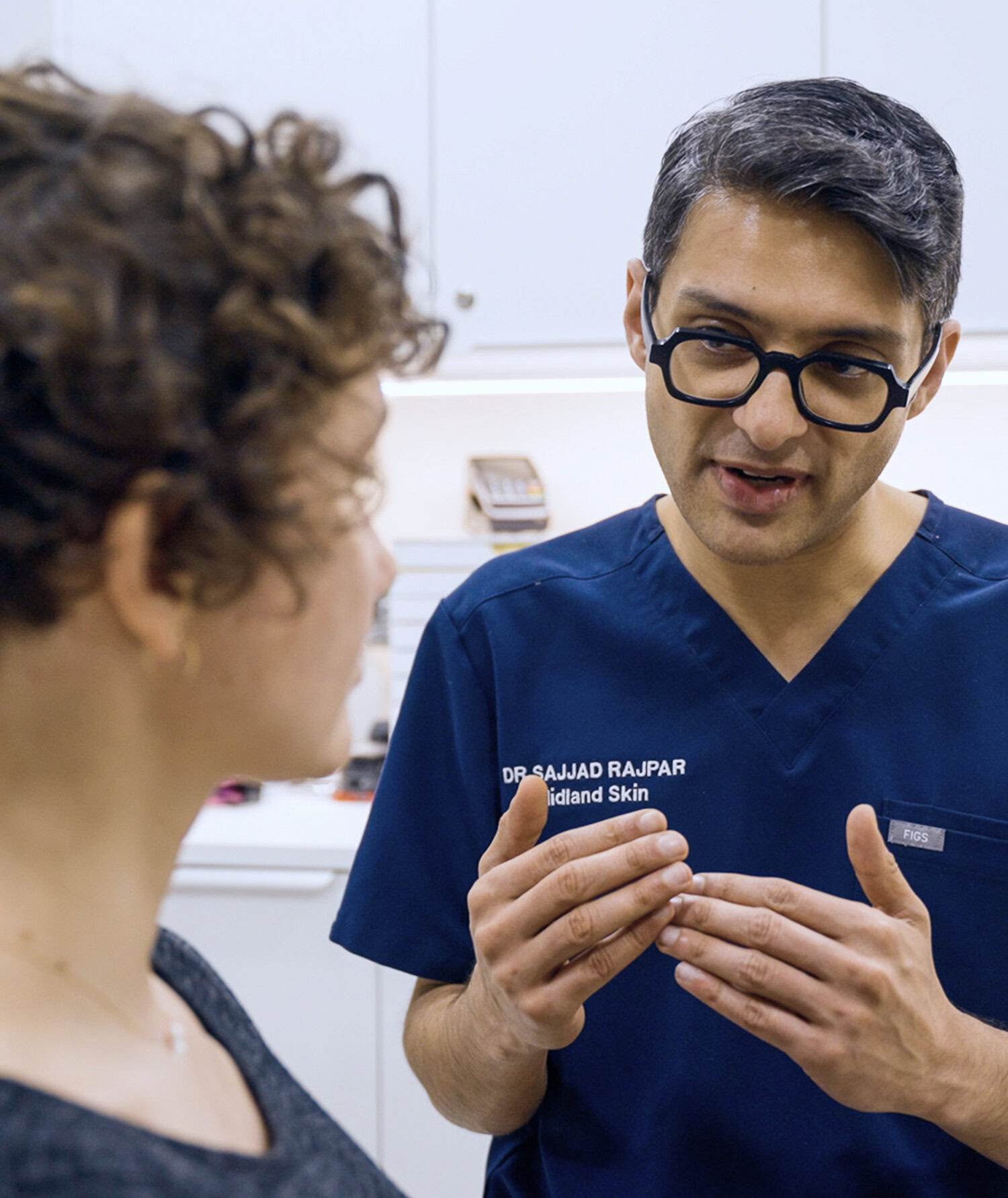
Quick facts about Mole Check treatment
- You need three 45 minute treatments – one every 3 to 4 weeks
- The results get better with time and at one year there is an average reduction in inflammatory spots of 97% according to clinical studies
- There are no harmful side effects
- The treatment is safe in all skin tones and all year round
- You do not need to take long-term tablets or creams
- There can be short-lived purges which can be managed with medications
What to Expect

Title Here
1-2 weeks
Title Here
1-2 weeks
Title Here
1-2 weeks
Title Here
1-2 weeks
Title Here
1-2 weeks
Title Here
1-2 weeks
Head to toe mole check examination by an expert
Our expert Dermatologists offer a full skin check. In this detailed examination of your skin from head to toe, all your moles and other skin lesions are examined. They are then looked at under the Dermatoscope, which enables the Dermatologist to see the pigment below the skin surface. Any abnormal moles or other lesions will be pointed out to you, and can either be monitored or removed (sometimes on the same day).

Scarlett Greenwood

My journey to treat persistent life long acne with Midland Skin team was truly amazing. I had been so scared of the whole process but the Dr put me at complete ease and understood how difficult life had been living with acne. I felt really supported in my treatment, able to ask questions and work together to get most out of the course. This treatment has truly changed my life and I can’t thank the team enough for setting me free after hiding all my adult life! Thank you!
What is a mole?
Moles are harmless skin growths that are formed by a collection of skin cells called melanocytes. Melanocytes are able to produce melanin, the pigment which gives colour to the skin. This is the reason why many moles are brown in colour. Most moles develop between the ages of 5 to 30 years of age, mostly around puberty. The average young adult has about 20 to 30 moles over their body. Interestingly, moles start to disappear in later life and the average 70 year old may only have 5 to 10 moles.
A mole may be medically referred to as a melanocytic naevus (or plural, naevi). There are different types of moles as follows:
- Junctional naevus – this is a flat mole
- Compound naevus – this is a raised mole
- Intradermal naevus – this is a very fleshy, raised mole
- Dysplastic naevus – or atypical mole – see below
- Melanoma – a cancerous mole
Book in with us
Ready to get started? Book a consultation with our team at Midland Skin. Friendly, expert advice tailored to you.
Who gets moles?
Virtually everyone has a mole. Fair skinned individuals tend to develop more moles than darker skinned individuals. 1% of babies are born with moles. Moles present from birth are often more warty and hairy in appearance than those that develop through life.
What do normal moles look like?
No two moles are exactly the same, even within the same person. Moles usually have an even brown colour, are symmetric and well defined. Some moles may have a hair growing through them. In later life, moles may start to loose their colour and become fleshy. This is especially so for moles on the face.
When should I be worried about a mole?
It is best to get a mole checked if it appears to be growing, becoming darker or starting to look irregular, especially if it starts standing out from the other moles. A mole that is bleeding or scabbing, or causing itch or pain should also be checked. Very occasionally moles can develop into a form of skin cancer called melanoma. Using the ABCDE criteria can help pick out melanoma (cancerous moles).
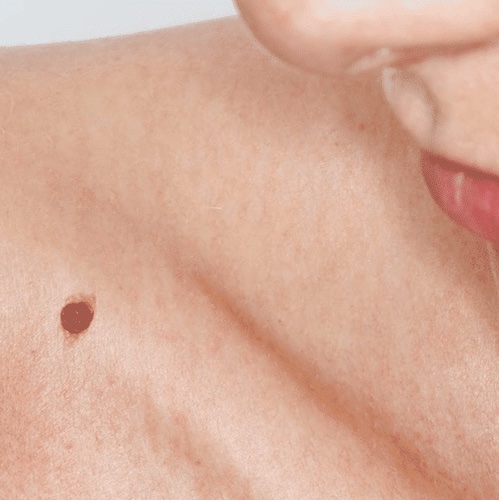
Watch More to Learn
See all videosABCDE rule for checking moles
Features to look out for in a mole that may suggest it has become cancerous are:
- Evolution – is the mole changing? Has it grown or change in colour in the last 3, 6 and 12 months? Or is it new?
- Asymmetry – does one half of the mole look the same as the other half?
- Border – are the borders (outlines) of the mole clear and sharp, or do they look blurred, jagged or irregular?
- Colours – are there more than 2 tones of colour? Is the colour haphazardly variable or is it even?
- Diameter – is the mole greater than 6mm in its diameter?
Atypical moles (dysplastic moles)
Atypical moles are also called dysplastic moles or dysplastic naevus. An atypical mole is a benign mole, that means it is not cancerous. However it may have some feature that make it look like a cancerous mole – for example it may be irregular in size, irregular in shape or irregular in colour. An atypical mole is often more than 6 mm in size and has more than one colour. There is an increased risk of some dysplastic moles turning into cancerous moles, and your doctor may either require monitoring or removal of moles that are very atypical.
How often should I have a mole check?
Most adults benefit from a yearly skin check.
Joshua Burrows
I’ve struggled with acne for around 8-9 years and it felt as though I had tried almost every topical product that you could think of along with strict skincare routines however nothing ever seemed to work for me until I came to Midland Skin. I was prescribed roaccutane by Dr Tanveer Chohan and my skin has improved significantly over the past 7 months to the point in which my acne seems to have completely disappeared. I can’t speak highly enough of all the staff here at Midland Skin, everyone is very welcoming and kind and they did a great job of ensuring that I was feeling okay at all times through monthly blood tests and check-ups. If I ever have any problems regarding my skin in the future I will without a doubt come back here, I can’t recommend it enough!
How do I monitor my moles?
It is best to check your moles over regularly (once ever couple of months) to see if any have changed. It is useful to take a photograph as a baseline to help check against, especially if you have a lot moles. It is also helpful to ask a friend or a partner to check over the back area as this is difficult to assess by yourself without two mirrors.
Book in with us
Ready to get started? Book a consultation with our team at Midland Skin. Friendly, expert advice tailored to you.
I have lots of moles
It is not uncommon to have more than 50 or even more than a 100 moles. It is important to get into the habit of checking your moles as described above as there is an increased of malignant change.
Can I have a mole check for peace of mind?
Certainly. A full skin check is a good way of having all your skin lesions checked over.
Mole removal
If a mole appears suspicious then your doctor will suggest removal.
We offer a full range of mole removal procedures. Moles can be removed if they are causing symptoms or if they have become an aesthetic concern.
What should I do next?
If you are worried about a mole or would like a full skin check of all your moles for peace of mind then please arrange to see one of our Dermatologists who will be happy to help.
Mole checks and treatments at Midland Skin Clinic
- Detailed consultation and skin analysis by a Dermatologist including a full head to toe skin check assessing all moles with Dermoscopy
- Advice on how to monitor any high risk moles
- Serial monitoring for those with large numbers of moles or at high risk of skin cancer – your Dermatologist will check your skin every 6 to 12 months
- Mole removal for cosmetic reasons or for analysis
Ashley Cooper
I had a fantastic experience with Dr Rajpar. I suffered with acne for over 20 years and had tried everything to try and help, without success. During the consultation he listened to my concerns and we came up with a treatment plan. Within 4 months my skin was completely acne free! We had regular check ins to ensure I was responding well to the treatment and to discuss any concerns. I am now at the end of my treatment and my skin has never looked better. I highly recommend Dr Rajpar for any skin concerns.
Book in with us
Pellentesque arcu cras cursus nascetur felis id sem gravida. Tellus lobortis eu erat in pellentesque ultrices. Egestas nunc iaculis massa turpis nulla.
Watch More to Learn
See all videosReceive more information
on Aviclear
If you’re interested in learning more about Aviclear (be that booking a consultation, getting further treatment information, prices etc) please leave your email address below and a member of our team will be in touch.


