
[vc_row type=”in_container” full_screen_row_position=”middle” equal_height=”yes” content_placement=”top” scene_position=”center” text_color=”dark” text_align=”left” top_padding=”50″ bottom_padding=”0″ overlay_strength=”0.3″ shape_divider_position=”bottom” shape_type=””][vc_column column_padding=”no-extra-padding” column_padding_position=”all” background_color_opacity=”1″ background_hover_color_opacity=”1″ column_shadow=”none” column_border_radius=”none” width=”2/3″ tablet_text_alignment=”default” phone_text_alignment=”default” column_border_width=”none” column_border_style=”solid”][vc_column_text]
Fractional laser resurfacing in Birmingham
Fractional CO₂ and Fractional Erbium laser resurfacing are a widely used and versatile type of laser resurfacing. Fractional laser involves the creation of microscopic holes in the skin to deliver precisely controlled thermal injury and trigger a wound healing and collagen remodelling response. It can be thought of as a more precise, light-based alternative to microneedling: instead of needles mechanically puncturing the skin, laser pulses create columns of ablation (removal) and coagulation (heating) that achieve deeper, more predictable renewal.
There are many reasons to consider fractional laser resurfacing, including:
- Facial rejuvenation – improvement in lines, wrinkles, texture, dullness, pigmentation, and overall skin quality.
- Scarring – softening acne scars, surgical scars, and hypertrophic/keloid) scars.
- Skin cancer prevention – fractional ablative and non-ablative laser resurfacing can reduce precancerous change in chronically sun-damaged skin and can reduce the risk of future skin cancer. As a dermatology clinic specialising in skin cancer, this is an increasingly common reason for treatment at Midland Skin.
[/vc_column_text][/vc_column][vc_column centered_text=”true” column_padding=”no-extra-padding” column_padding_position=”all” background_color_opacity=”1″ background_hover_color_opacity=”1″ column_shadow=”none” column_border_radius=”none” width=”1/3″ tablet_text_alignment=”default” phone_text_alignment=”default” column_border_width=”none” column_border_style=”solid”][nectar_btn size=”large” button_style=”regular” button_color_2=”Extra-Color-2″ icon_family=”default_arrow” url=”/contact-us” text=”Make an appointment” margin_top=”45″][nectar_btn size=”large” button_style=”regular” button_color_2=”Accent-Color” icon_family=”default_arrow” url=”tel:+441212854540″ text=”Call us now” margin_top=”45″][/vc_column][/vc_row][vc_row type=”in_container” full_screen_row_position=”middle” scene_position=”center” text_color=”dark” text_align=”left” overlay_strength=”0.3″ shape_divider_position=”bottom”][vc_column column_padding=”no-extra-padding” column_padding_position=”all” background_color_opacity=”1″ background_hover_color_opacity=”1″ column_shadow=”none” column_border_radius=”none” width=”1/1″ tablet_text_alignment=”default” phone_text_alignment=”default” column_border_width=”none” column_border_style=”solid”][divider line_type=”No Line” custom_height=”50″][vc_column_text]
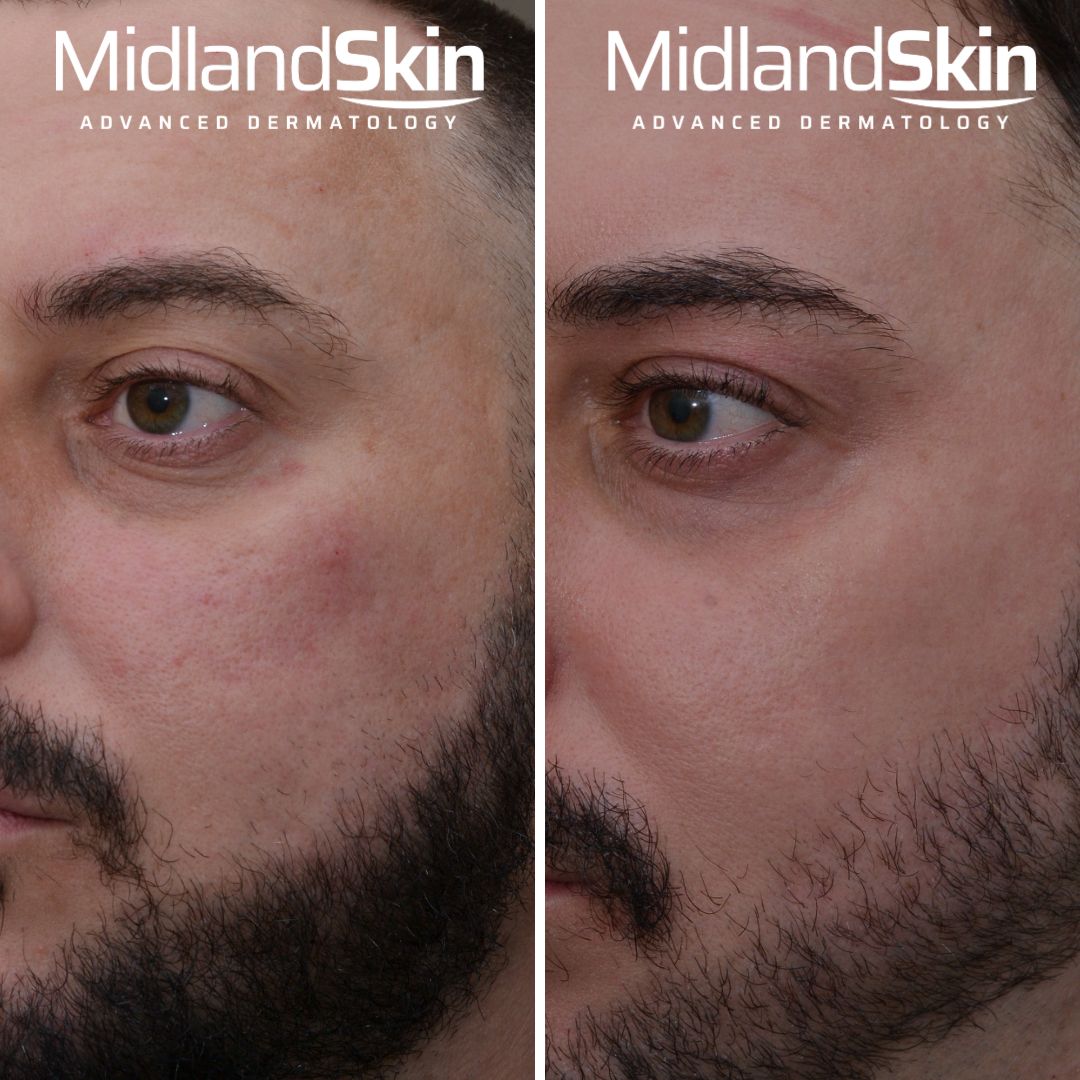
The science behind fractional lasers: ablation and coagulation explained
Fractional laser treatment creates a grid of dots on the skin. Each dot is called a microscopic treatment zones (MTZs) – a tiny column through which laser energy is delivered into the skin. Areas of untreated skin between MTZs allow rapid healing, because only a fraction of the surface is treated at a time – hence the term “fractional.”

Ablative vs non ablative fractional laser
There are 2 types of fractional laser resurfacing:
- Ablative fractional laser resurfacing
- Non-ablative fractional laser resurfacing
Ablative fractional laser
With ablative fractional laser, each microscopic column of skin is ablated (removed) and a margin of skin around it is coagulated (heated).
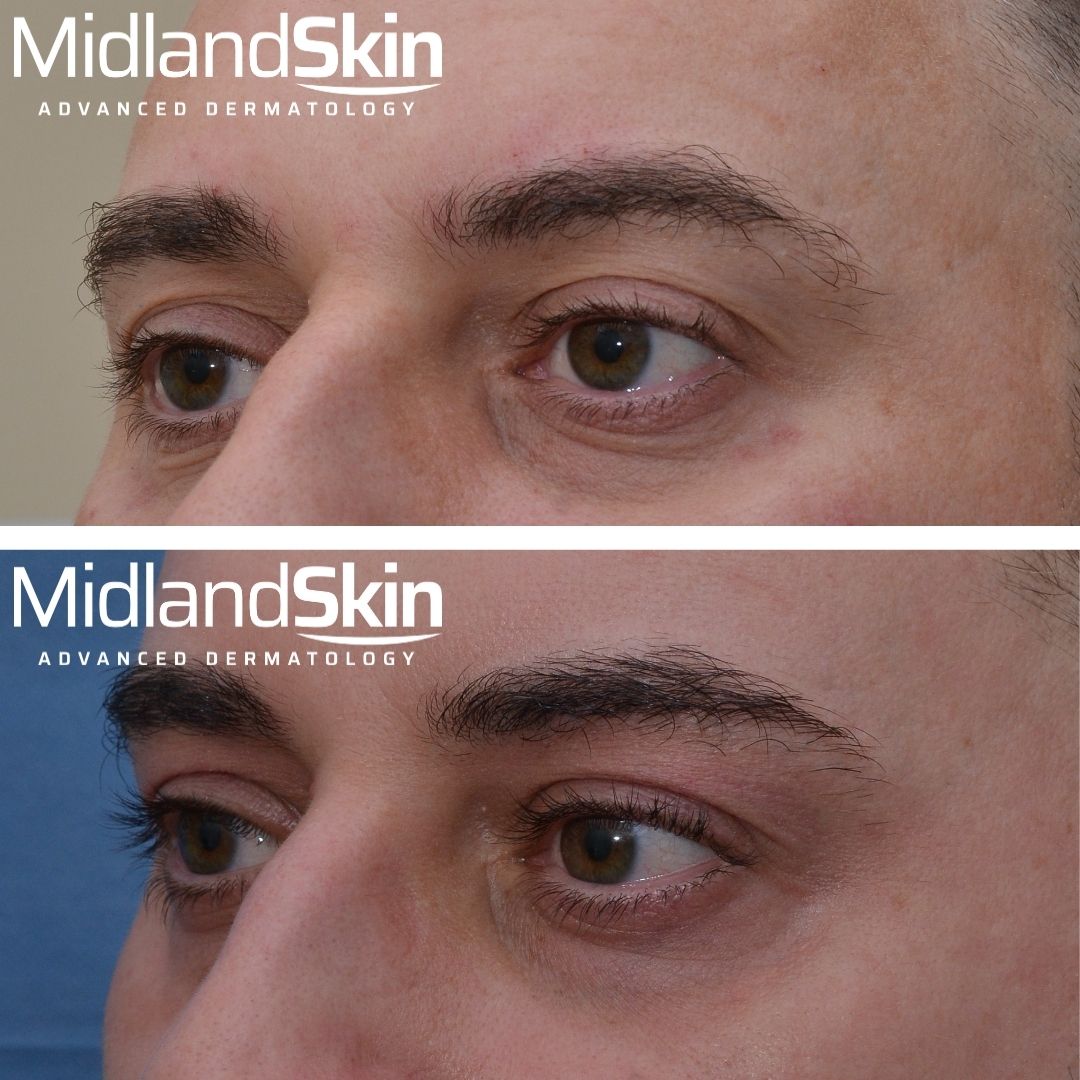
There are three main laser wavelengths used for ablative fractional laser resurfacing, all available at Midland Skin:
- Fractional CO₂ laser (10,600 nm): robust ablation with fixed, coagulation thermal zone; ideal for rejuvenation, wrinkles, and scars. Any skin type. At Midland Skin we use the Lumenis Ultrapulse CO2 laser.
- Fractional Er:YAG laser (2,940 nm): precise ablation, minimal heat; can be tuned to add some coagulation. At Midland Skin we use the Sciton Joule Erbium Yag laser. Suitable for any skin type.
- UltraClear laser (Fractional 2,910 nm erbium): new erbium wavelength, also “cold” fractional style ablation with heat that can be dialled in. At Midland Skin we use the Ultraclear, which is the only laser in this wavelength. Suitable for any skin type
These columns of controlled injury trigger a wound healing response, stimulating the skin to produce more collagen and regenerate.
In contrast, fully ablative resurfacing removes the entire epidermis in the treated area, leading to longer recovery but sometimes greater improvement.
There are various differences between these three fractional ablative lasers. Your dermatologist will choose the most appropriate system based on specific treatment goals. Each laser can be finely adjusted, and there is significant overlap in capability.
They differ in:
- the width of the ablative columns
- the extent of the surrounding coagulation zone
- the proportion of surface area treated per pass (density)
- the depth of penetration
Non ablative fractional laser resurfacing – Halo laser
Non ablative fractional laser delivers thermal energy into the dermis without removing surface skin. This triggers a controlled healing response and new collagen formation. At Midland Skin we often use the Halo laser, which uniquely combines a 2 940 nm erbium (ablation) channel with a 1 470 nm non-ablative (coagulative) channel in a single pass. Because most of the effect is thermal rather than ablative, recovery is typically faster and downtime shorter than with fully ablative treatments.
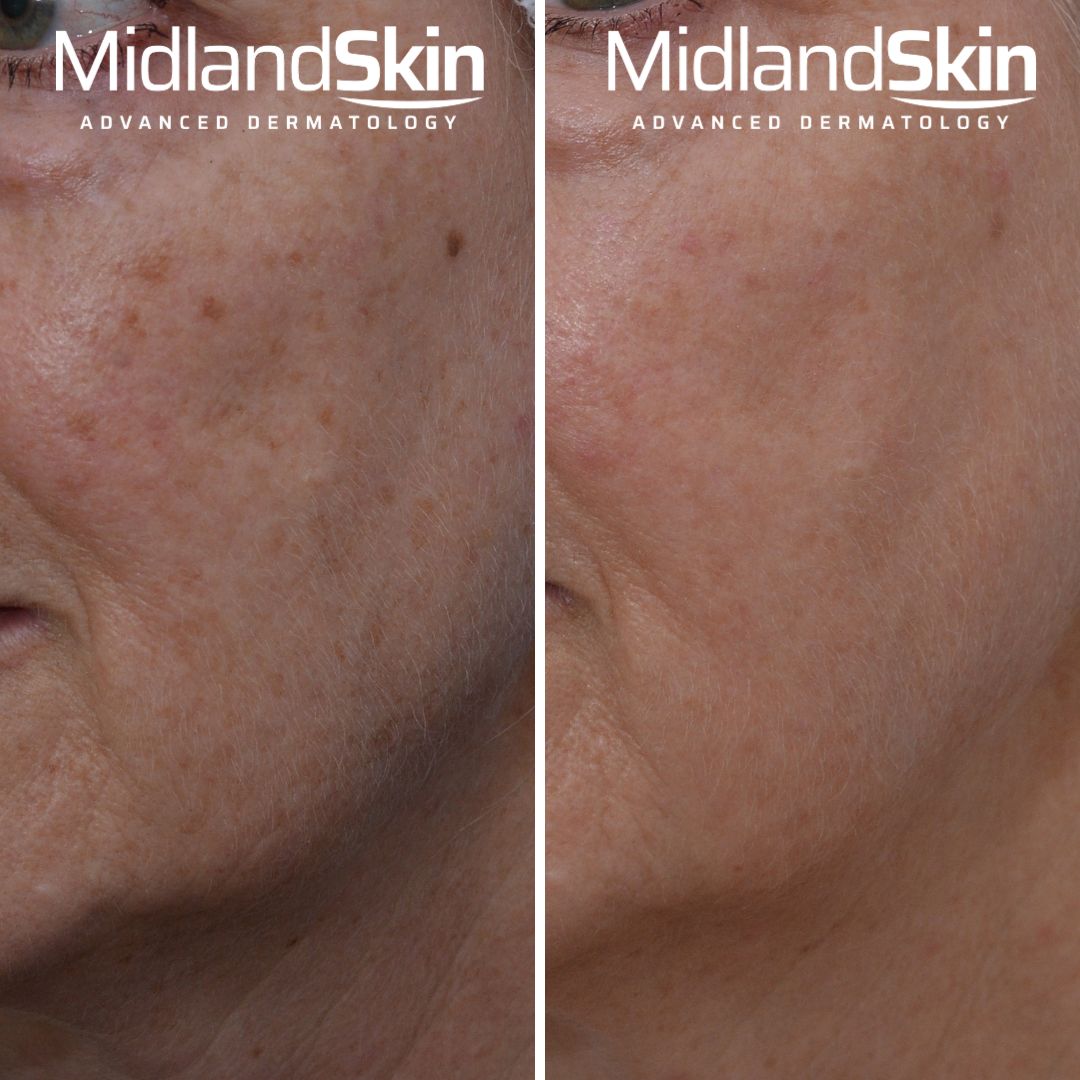
Non thermal fractional laser resurfacing
For the sake of completeness, there is a further category of fractional resurfacing that neither ablates nor coagulates the skin surface. The Spectra Multi-Depth Fractional (MDF) uses ultra-short acoustic pulses to trigger laser-induced optical breakdown (LIOB) and plasma just below the surface, stimulating rejuvenation and collagen production. This is the same principle by which picosecond fractional lasers work.
What are the benefits of fractional laser resurfacing
Fractional laser resurfacing generally heals more quickly than traditional full-field ablative resurfacing, often within 7–10 days, and carries a lower risk of side-effects like post-inflammatory hyperpigmentation (PIH).
Because only part of the skin is treated in each session, multiple treatments may be required for optimal results. For long-term benefit, an annual maintenance session is often recommended.
What to expect after fractional ablative laser treatment
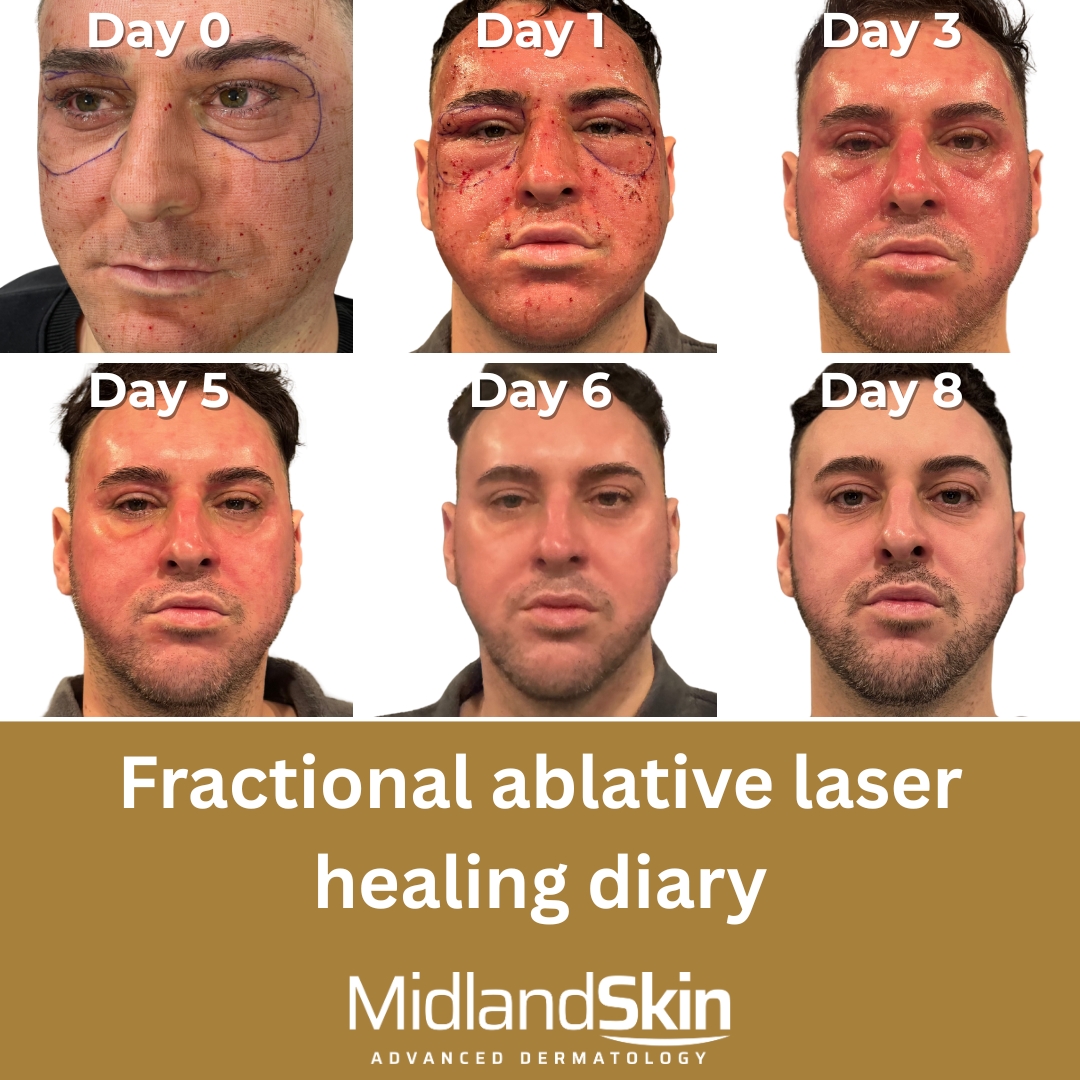
It is common to experience swelling, redness, heat and mild oozing in the treated areas. Swelling appears soon after treatment, and a warm, sunburn-like sensation develops over the first few hours as the anaesthetic wears off.
You may take paracetamol regularly every six hours for discomfort. Ibuprofen can also be used if you have no contraindications such as stomach, kidney or bleeding problems. The feeling of heat and tenderness usually settles within 48 hours.
Redness and swelling generally improve over 3–6 days. You will notice a pattern of fine dots where the laser has treated the skin. These may appear red, pale, or skin-coloured, and can darken slightly as tiny crusts form. It is important not to pick these scabs; they will lift naturally as new skin develops beneath. The pattern fades gradually over the following week.
Oozing of clear or slightly yellow fluid is normal during the first few days, and pinpoint bleeding can occur after erbium laser treatment. The fluid dries to form a light crust before separating naturally.
Itching is common around day 4. If it becomes troublesome, a non-sedating antihistamine can help.
Most patients feel comfortable to apply mineral make-up after 7–10 days. Deeper or higher-density treatments may take longer, particularly around the eyes or mouth. Mild redness may persist for several weeks, occasionally months, especially in lighter skin types.
Skin care while recovering
You will receive personalised aftercare instructions. In most cases we advise:
- Cleansing: Wash gently twice a day with a soap-free cleanser such as Dermol 500 or an equivalent.
- Moisturising: Apply a barrier ointment (for example Aquaphor or plain petrolatum) for the first 3–5 days to keep the surface moist.
- Transition: After day 5, switch to a lighter, non-fragranced moisturising lotion such as CeraVe or Cetaphil.
- Sun protection: Avoid sun exposure until fully healed, then use a high-factor (SPF 50+) sunscreen daily.
- Medication: If you are prone to cold sores, we will usually prescribe antiviral tablets to start on the day of treatment. A short course of oral steroids may be advised to reduce swelling after deeper procedures.
Your dermatologist may modify this plan if you have sensitive skin, eczema, rosacea, or a history of pigment change.
Risks and possible side-effects
Fractional laser resurfacing is generally safe when performed by an experienced clinician, but all procedures carry potential risks. These include:
- Infection: Rare, but antibiotics may be given for higher-intensity treatments or if signs of infection develop.
- Cold-sore reactivation: Prophylactic antivirals are recommended for patients with a history of herpes simplex.
- Acne flares: The procedure can temporarily worsen acne if not well controlled beforehand; we may prescribe topical or oral medication to prevent this.
- Persistent redness: Usually fades within weeks, but can occasionally last several months after deeper CO₂ resurfacing.
- Post-inflammatory hyperpigmentation: Temporary darkening may occur, especially in darker skin types. This usually resolves within three months and can be treated with prescription creams.
- Melasma flare: Melasma can worsen temporarily and may require maintenance therapy.
- Scarring: Extremely rare with fractional techniques, but possible if infection or trauma occurs during healing.
- Unsatisfactory or limited response: Results vary between individuals. Some patients may require multiple sessions or combination treatments for optimal improvement.
Your doctor will discuss all potential side-effects and how we minimise them before you decide to proceed.
Why choose Midland Skin in Birmingham
At Midland Skin, all laser resurfacing treatments are performed or supervised by a consultant dermatologist with specialist expertise in laser medicine. We offer one of the broadest ranges of fractional systems in the UK, including:
- UltraPulse CO₂ – for deeper lines, scars and etched wrinkles
- Sciton ProFractional Er:YAG – precise, low-thermal treatment for delicate areas
- Halo hybrid fractional – dual-wavelength system combining ablation and coagulation
- UltraClear 2910 nm – next-generation erbium laser for rapid recovery
- MDF (Spectra Multi-Depth Fractional) – non-thermal acoustic fractional for pores and texture
This allows us to tailor each procedure to your skin type, treatment goals and recovery preferences.
FAQs
Is fractional laser safe for darker skin?
Yes — when performed with appropriate settings and aftercare. The inherent incrased risk of post inflammatory hyperpigmentation is accepted as this is mostly transient.
Halo vs CO₂ vs Er:YAG vs UltraClear vs MDF – which should I choose?
It depends on your goals and downtime tolerance. Halo and UltraClear suit mild to moderate rejuvenation with quick recovery. CO₂ is used for deeper scars or etched lines. Er:YAG offers precision for delicate areas. MDF suits sensitive skin and textural improvement. Your dermatologist will guide you on the safest and most effective option.
Can laser resurfacing be done on the same day as the consultation?
No. We allow at least a two-week “cooling-off” period after consultation so you can consider the information provided before scheduling treatment.
What is the safest approach for under-eye crêpiness?
In suitable skin types, TotalFX CO₂ can provide noticeable tightening. In darker skin or those at higher pigment risk, erbium or Sofwave tightening may be preferred. Eye shields are always used for protection.
How many sessions will I need?
For general rejuvenation, most patients benefit from 1–2 sessions spaced about 8 weeks apart, followed by annual maintenance. Scars often need a staged plan using different lasers over time.
When can I wear make-up again?
Usually after 7–10 days for lighter treatments. With deeper CO₂ resurfacing, redness can persist longer even when the skin surface has healed. Mineral make-up is preferable initially.
Do fractional lasers help skincare absorb better?
Briefly, yes. Immediately after treatment, the micro-channels allow selective absorption of topical products, which we sometimes use for pigment-suppressing or collagen-stimulating serums tailored to your skin type.
What happens during a fractional laser treatment?
A topical anaesthetic is applied about 45 minutes before treatment. Local anaesthetic injections may also be used in sensitive areas. Some regions such as the neck or chest may not require numbing cream. You will wear protective eyewear throughout.
What does it feel like?
Patients often describe a sensation of warmth or prickling, similar to a sunburn. Cooling and topical anaesthetic make this tolerable.
How long does treatment take?
A full-face session typically lasts 30–40 minutes depending on the depth and density used.
Will I need eye shields?
Yes, metal eye shields are required for eyelid treatments to protect the eyes from laser light.
References
- Manstein D, Herron G S, Sink R K, Tanner H, Anderson R R. Fractional photothermolysis. Lasers Surg Med. 2004;34(5):426–438.
- Robati R M, Asadi E. Fractional CO₂ vs Er:YAG in wrinkles. Lasers Med Sci. 2017;32(2):283–289.
- Selim M M et al. Clinical evaluation of a new 2910 nm erbium laser. Lasers Surg Med. 2023.
- Tanghetti E A. Histology of skin treated with picosecond fractional lens array. Lasers Surg Med. 2016;48(7):646–652.
- El-Domyati M et al. Fractional CO₂ for acne scars. Indian J Dermatol Venereol Leprol.</
[/vc_column_text][/vc_column][/vc_row][vc_row type=”in_container” full_screen_row_position=”middle” scene_position=”center” text_color=”dark” text_align=”left” overlay_strength=”0.3″ shape_divider_position=”bottom”][vc_column column_padding=”no-extra-padding” column_padding_position=”all” background_color_opacity=”1″ background_hover_color_opacity=”1″ column_shadow=”none” column_border_radius=”none” width=”1/1″ tablet_text_alignment=”default” phone_text_alignment=”default” column_border_width=”none” column_border_style=”solid”][vc_column_text]
What should I do next?
Contact us here to arrange a consultation where you can discuss your needs and assess your suitability for resurfacing. Our fees can be reviewed here.
Author Details
Author: Dr Sajjad Rajpar
Date last reviewed: 1 Sept 2025
Conflict of interest and disclaimer
[/vc_column_text][/vc_column][/vc_row][vc_row type=”in_container” full_screen_row_position=”middle” scene_position=”center” text_color=”dark” text_align=”left” overlay_strength=”0.3″ shape_divider_position=”bottom”][vc_column column_padding=”no-extra-padding” column_padding_position=”all” background_color_opacity=”1″ background_hover_color_opacity=”1″ column_shadow=”none” column_border_radius=”none” width=”1/1″ tablet_text_alignment=”default” phone_text_alignment=”default” column_border_width=”none” column_border_style=”solid”][vc_column_text]
[/vc_column_text][/vc_column][/vc_row]


